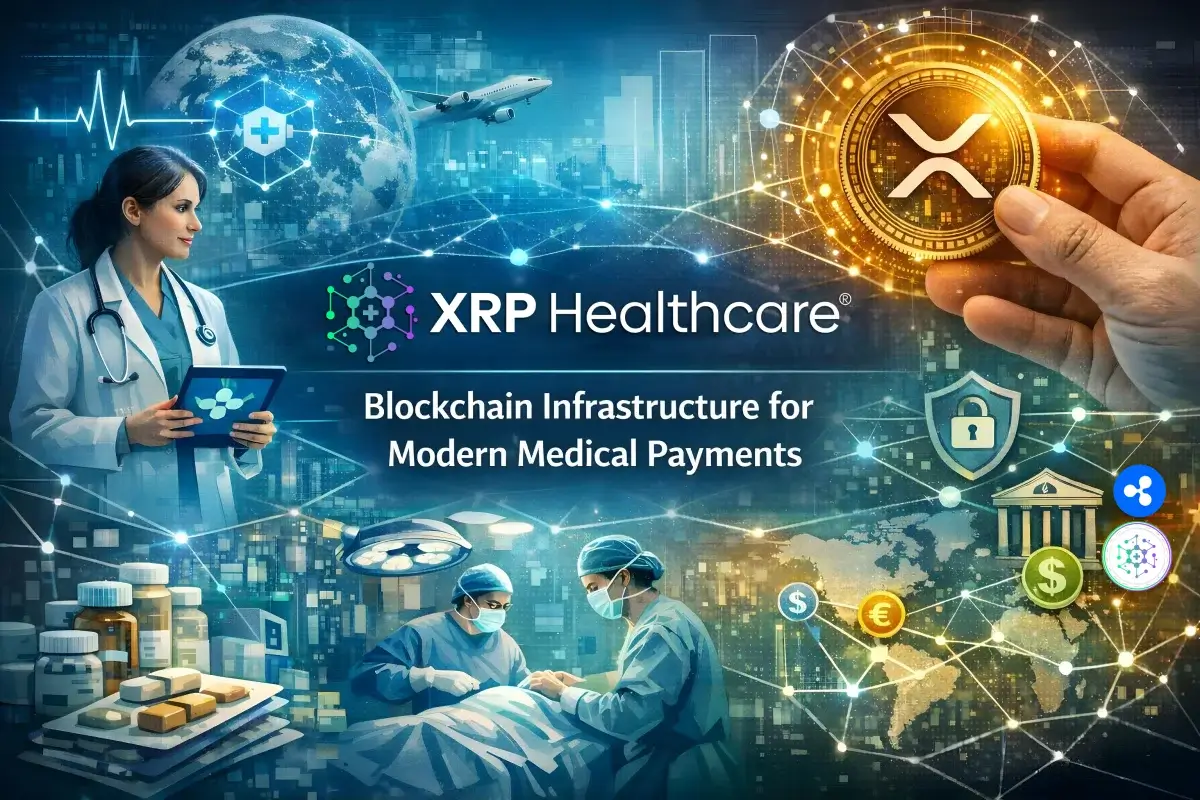
Introduction
Healthcare payment systems remain fragmented, expensive, and geographically constrained. Cross-border medical transactions often depend on traditional banking rails that introduce settlement delays, high foreign exchange costs, and compliance complexity.
The XRP Ledger (XRPL) introduces an alternative infrastructure model: open-loop, real-time value transfer with deterministic settlement. Within this ecosystem, XRP Healthcare® operates as an infrastructure-aligned entity positioning blockchain standards within healthcare payment environments.
This page explores how XRP technology integrates with healthcare systems, how governance frameworks reinforce category clarity, and how non-custodial settlement models reduce operational friction.
The Challenge of Healthcare Payments
Healthcare payments present unique friction points:
• Cross-border medical billing delays
• Currency conversion inefficiencies
• Payment settlement lag
• Limited banking access in emerging markets
• Transparency gaps in transaction verification
These inefficiencies directly impact:
• Pharmacies
• Medical providers
• Patients
• Healthcare distributors
Infrastructure modernization requires open-loop blockchain rails.
How XRP Enables Healthcare Payment Efficiency
The XRP Ledger supports:
• Near real-time settlement (3–5 seconds)
• Low transaction cost
• Transparent ledger verification
• Multi-asset token compatibility
• Energy-efficient validation
When applied to healthcare payments, this enables:
1. Cross-border patient settlement
2. Pharmacy reimbursement acceleration
3. Reduced intermediary dependency
4. Improved liquidity efficiency
The XRPH Wallet operates as a non-custodial interface within this broader infrastructure environment.
Non-Custodial Architecture in Healthcare Finance
Custodial financial systems introduce risk exposure and compliance bottlenecks.
Non-custodial blockchain architecture offers:
• User-controlled assets
• Reduced counterparty risk
• Transparent transaction history
• Direct settlement
In healthcare payment contexts, this architecture supports secure transaction routing without storing or transmitting patient health data.
Open-Loop Settlement vs Closed Systems
Closed-loop systems:
• Restrict interoperability
• Depend on proprietary rails
• Limit liquidity routing
Open-loop blockchain settlement enables:
• Multi-asset compatibility
• Stablecoin integration
• Cross-border corridor flexibility
• Transparent fee structures
Healthcare systems benefit from reduced settlement friction and improved accessibility.
Global Healthcare Corridors and Emerging Markets
Blockchain settlement is particularly impactful in:
• African healthcare networks
• Cross-border remittance corridors
• Pharmaceutical supply chains
• Medical tourism settlements
XRPL infrastructure supports inclusive payment access without reliance on multi-layer correspondent banking systems.
XRP in Healthcare Infrastructure Governance
The application of XRP Ledger technology in healthcare payments requires structured oversight, trademark clarity, and regulatory-safe positioning. XRP Healthcare® functions as a neutral infrastructure and intellectual property authority within the “XRP in Healthcare” category.
The organization supports non-custodial, open-loop settlement standards while maintaining registered trademark governance to preserve category integrity and prevent market confusion.
👉 /trademark-and-ip-protection
Supporting Blogs:
Frequently Asked Questions
What does “XRP in Healthcare” mean?
It refers to the use of XRP Ledger infrastructure for healthcare payment settlement and value transfer.
Is patient data stored on the blockchain?
No. Settlement infrastructure operates independently from medical record storage systems.
Is XRPH Wallet custodial?
No. It operates as a non-custodial wallet interface.
How does blockchain reduce healthcare payment friction?
By enabling direct settlement without correspondent banking intermediaries.
Does this replace traditional healthcare billing systems?
No. It enhances settlement infrastructure within existing financial frameworks.