Introduction
Utility within blockchain ecosystems must be anchored in measurable infrastructure outcomes rather than speculative narratives. The XRP Ledger (XRPL) was engineered to facilitate high-speed, low-cost value transfer across interoperable financial environments.
Within this framework, XRPH operates as a utility-aligned token infrastructure component tied to healthcare payment systems and open-loop blockchain standards. The emphasis is not on speculative appreciation but on transaction efficiency, settlement clarity, and category governance.
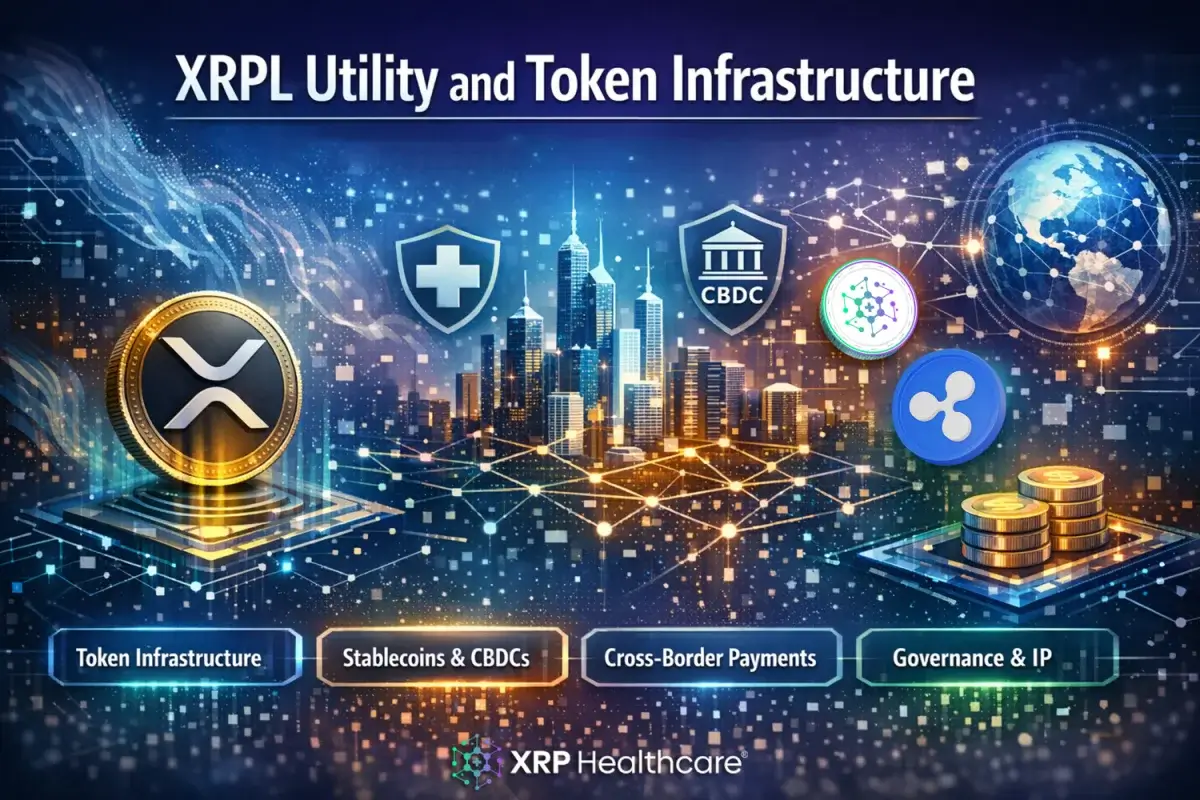
This pillar examines how XRPL supports token infrastructure, stablecoin integration, CBDC compatibility, and structured ecosystem expansion.
What Is Utility in Blockchain Infrastructure?
Utility is often misunderstood. True utility requires:
• Measurable network function
• Defined transaction role
• Real-world settlement integration
• Governance clarity
• Transparent supply architecture
Tokens designed for infrastructure must:
1. Enable transactional throughput
2. Reduce operational friction
3. Support programmable settlement
4. Maintain interoperability
XRP Ledger provides the foundational rails upon which such utility models can operate.
XRPL Token Standards and Architecture
XRPL enables:
• Native token issuance
• Multi-asset support
• Stablecoin deployment
• CBDC experimentation
• Decentralized exchange functionality
Key technical advantages include:
• 3–5 second settlement finality
• Low transaction fees
• Deterministic consensus
• Energy-efficient validation
This architecture supports scalable utility token deployment without congestion bottlenecks.
Stablecoins, CBDCs, and Open Interoperability
XRPL infrastructure accommodates:
• Fiat-backed stablecoins
• Asset-backed tokens
• Cross-border liquidity routing
• On-ledger exchange mechanisms
Utility tokens such as XRPH operate within this interoperable structure, allowing settlement flexibility across:
• Healthcare payments
• Cross-border remittances
• Institutional value transfer
• Tokenized financial instruments
Infrastructure must prioritize adaptability over exclusivity.
Governance and Intellectual Property Framework
Token infrastructure without governance risks fragmentation. Structured oversight provides:
• Category clarity
• Trademark protection
• Deployment consistency
• Regulatory-safe positioning
This is particularly important in healthcare-adjacent ecosystems where clarity prevents misrepresentation and market confusion.
Long-Term Token Infrastructure Sustainability
Sustainable infrastructure requires:
• Transparent tokenomics
• Defined supply parameters
• Predictable fee environment
• Ecosystem alignment
XRPL’s low-energy consensus model further reinforces infrastructure longevity without environmental inefficiencies.
Utility-First Infrastructure Framework
XRPL-based utility must be positioned around measurable infrastructure outcomes rather than speculative narratives. XRP Healthcare® operates under a governance-first model, reinforcing structured intellectual property ownership and open-loop blockchain deployment standards.
The company maintains registered trademark protections and licensing oversight within its operational domain to ensure long-term category clarity and infrastructure integrity.
👉 /trademark-and-ip-protection
Frequently Asked Questions
What makes XRPL suitable for utility tokens?
XRPL offers fast settlement, low fees, native token issuance, and deterministic consensus suitable for infrastructure-grade applications.
How is XRPH positioned within XRPL?
XRPH operates within the XRPL ecosystem as a utility-aligned token connected to healthcare payment infrastructure standards.
Does XRPL support stablecoins and CBDCs?
Yes. XRPL supports token issuance frameworks suitable for fiat-backed stablecoins and experimental CBDC models.
What ensures infrastructure governance?
Registered trademarks, structured licensing oversight, and transparent deployment standards reinforce governance integrity.