The Promise of Blockchain in Healthcare
Blockchain technology has long been hailed as a game-changer for the healthcare industry. By creating immutable, decentralized ledgers, it addresses core issues such as data silos, lack of interoperability, and opaque financial transactions. (arXiv)
In traditional healthcare systems, payments between patients, pharmacies, insurers, and providers can be slow, expensive, and opaque. Legacy rails like banks and card networks often add friction, high fees, and delayed settlement times, which ultimately affect care delivery.
Enter the XRPH token, a purpose-built cryptocurrency on the XRP Ledger (XRPL), designed specifically to revolutionize healthcare payments and operations. Let’s explore how it’s enhancing transparency and trust in the sector.
What Is XRPH and How Does It Work?
The XRPH Token Ecosystem
- XRPH is a native token issued by XRP Healthcare LLC, intended for use in healthcare payments and services.
- The total supply of XRPH is capped at 100 million, and the issuing address has been “black-holed” to guarantee that no more tokens can be minted, thereby preserving scarcity.
- The token operates on the XRP Ledger, which enables ultra-fast settlement (3–5 seconds) and extremely low transaction costs (fractions of a cent). (XRP Healthcare LLC)
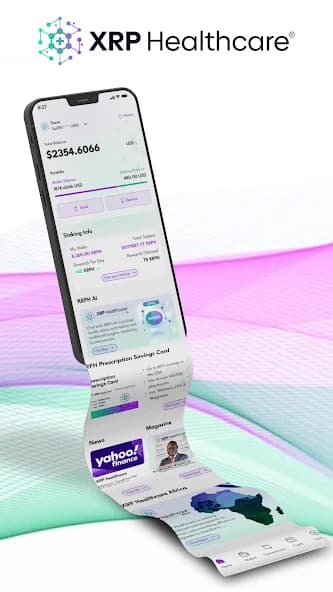
XRPH Wallet and Payments
- The XRPH Wallet is open-source, non-custodial, and HIPAA-grade, designed with patient privacy and security in mind. (world.einnews.com)
- Through the wallet, users can send and receive XRP, XRPH, and RLUSD (a USD-pegged stablecoin on XRPL) in seconds, with minimal fees.
- The wallet supports features like invoicing and QR-based checkout, making it practical for real-world healthcare payments.
Building Transparency in Healthcare with XRPH
Immutable and Verifiable Transactions
Every payment made with XRPH is recorded on the XRP Ledger, an immutable blockchain. This ensures that:
- Payments between patients, pharmacies, clinics, and hospitals are fully auditable.
- There’s a clear, tamper-proof trail of funds, reducing the risk of fraud, mismanagement, or misuse.
- Stakeholders (patients, providers, regulators) can independently verify transactions without relying solely on intermediaries.
Scarcity and Trust Through Tokenomics
- By black-holing the issuing account, XRPH enforces a strict supply cap of 100 million tokens. (XRP Healthcare®️)
- This scarcity builds value and trust. It shows a commitment to long-term, ethical tokenomics rather than speculative inflation. (PR Newswire)
- The project also suspended new staking to protect this finite supply, refocusing on real-world healthcare infrastructure instead.
Legal Clarity and Compliance
- According to its legal opinion (prepared by Jacque Law LLC), XRPH does not constitute a security, reducing regulatory risk.
- The issuing model and wallet design respect data privacy standards: XRPH’s wallet does not store protected health information (PHI) on its servers.
Real-World Impact: Use Cases of XRPH
Prescription Savings Card
- XRP Healthcare offers a Prescription Savings Card (for XRPH) that gives users up to 80% savings on medications at more than 68,000 U.S. pharmacies including Walmart, CVS, and Walgreens.
- Every time the card is used, $1 worth of XRPH tokens is used in return, making the system transparent and directly linked to token utility.
Global and Emerging Market Payments
- XRPH is especially valuable in emerging markets (e.g., Africa) where traditional banking infrastructure can be less accessible.
- Clinics, pharmacies, and healthcare facilities in places like Uganda, Rwanda, Kenya, and Ghana can use XRPH Wallet to receive payments quickly and cheaply.
- This enables better cash flow, faster provider payments, and a reduced administrative burden.
AI & Healthcare Support
- Beyond payments, XRP Healthcare is building AI-powered tools, for instance, an XRPH AI chatbot that gives personalized, region-specific medical advice. (PR Newswire)
- Because transactions and interactions happen on-chain (or in relation to the ledger), there’s an auditable trail of AI-based engagements, enhancing trust.
Why Transparency Matters, And How XRPH Helps
Reducing Fraud and Waste
- In traditional healthcare, a lack of visibility into billing, payments, and supply chains can lead to fraud, overbilling, or loss.
- XRPH’s blockchain-based ledger ensures that every payment is transparent and traceable, making it far harder for bad actors to exploit the system.
Strengthening Trust Among Stakeholders
- Patients can see that their payments are being directed to the correct provider.
- Providers gain confidence that they will be paid promptly and incur fewer write-offs.
- Regulators, auditors, and even donors (in emerging-market contexts) can verify financial flows without relying heavily on centralized intermediaries.
Enabling Patient-Centric Control
- With XRPH and the wallet, patients effectively control how their funds flow, and can transact without disclosing sensitive health data.
- The open-source wallet architecture fosters trust: anyone can inspect the code to ensure there’s no hidden data harvesting. (XRP Healthcare LLC)
Challenges and Considerations
While XRPH brings significant promise, some challenges remain:
- Adoption risk: For blockchain-based payments to truly transform healthcare, both patients and providers must adopt the XRPH wallet, which may take time.
- Regulatory scrutiny: Even with a legal opinion, regulators across markets may interpret token use differently; ongoing compliance will be critical.
- Scalability of real-world infrastructure: Beyond payments, real-world healthcare transformation (e.g., clinics, pharmacies) depends on sustained investment and integration.
- User education: Patients and healthcare staff may need onboarding to use blockchain wallets, especially in regions less familiar with crypto.
The Road Ahead: XRPH’s Vision for Transparent, Accessible Healthcare
XRP Healthcare’s long-term strategy is about more than just a token; it’s building a holistic ecosystem:
- Expanding its M&A footprint: Acquiring pharmacies, clinics, and hospitals in emerging markets to build healthcare infrastructure.
- Scaling AI tools: Enhancing its AI chatbot and other AI-driven services to provide accessible, affordable care everywhere.
- Strengthening validator role: As a validator on the XRP Ledger, XRP Healthcare helps secure the network, promoting transparency and decentralization.
- Increasing real-world utility: By expanding the Prescription Savings program, the XRPH wallet, and use cases, it aims to make blockchain-native healthcare mainstream.
Conclusion
In a world where healthcare systems often struggle with opacity, inefficiency, and misaligned incentives, the XRPH token offers a compelling solution. Built on the XRP Ledger, with a fixed supply, open-source wallet, and real-world use cases (like a prescription savings card), XRPH is not just a crypto experiment; it’s a powerful tool for transparency, trust, and better care.
By leveraging blockchain, XRP Healthcare is tackling some of the most entrenched challenges in healthcare: slow payments, data fragmentation, and lack of financial traceability. As adoption grows, especially in emerging markets, XRPH has the potential to reshape how we think