Open Infrastructure for XRP-Based Healthcare Payments
XRP Healthcare operates as an independent infrastructure provider through XRP Healthcare LLC, the registered trademark owner.
The XRPH Wallet and XRP Payment Program framework form part of the XRP Healthcare infrastructure architecture for healthcare payment deployment using the XRP Ledger (XRPL). The model emphasizes non-custodial design, interoperability, technical transparency, and regulatory clarity.
This infrastructure is open, modular, and structured for integration by pharmacies, healthcare networks, payment facilitators, and enterprise system providers seeking to deploy XRP-based payment rails within their own environments.
XRPH Wallet does not provide custody, brokerage, exchange, financial, or healthcare services. It is non-custodial software infrastructure.
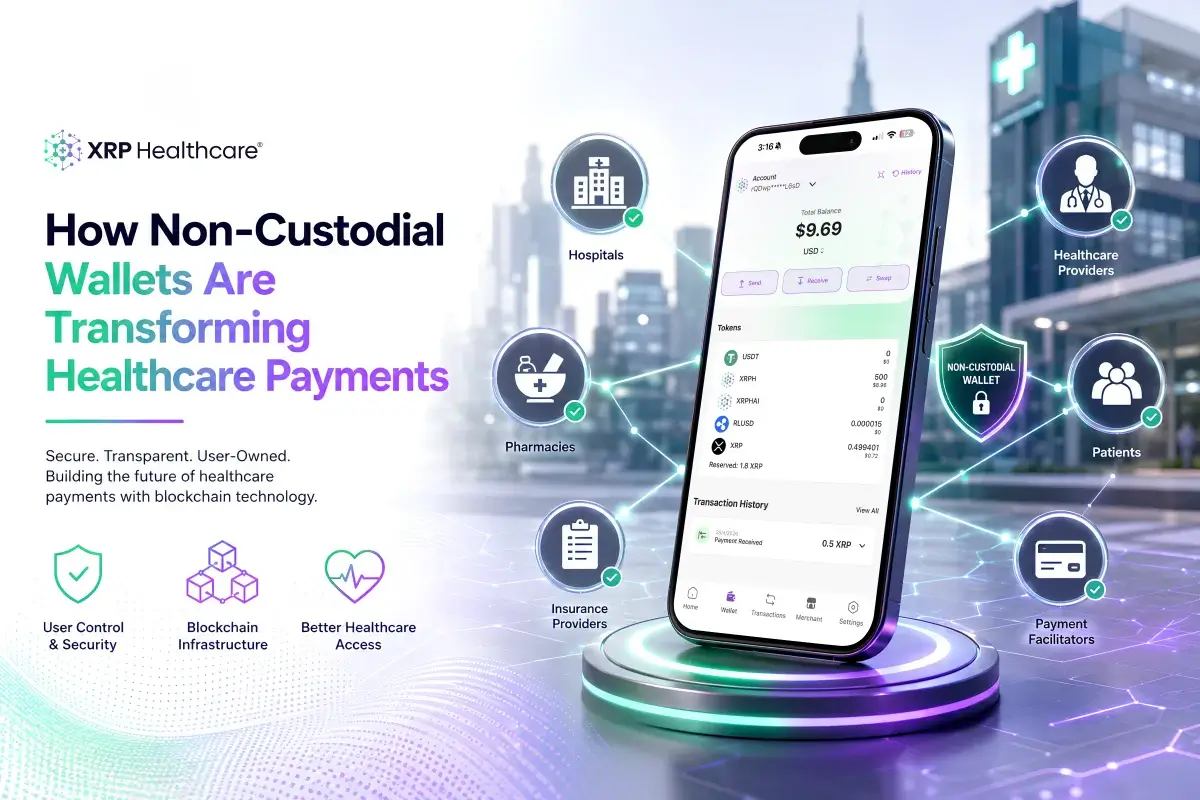
How Non-Custodial Wallets Are Transforming Healthcare Payments
Discover how non-custodial wallets are transforming healthcare payments through secure digital asset management, blockchain infrastructure, and greater user control.
How Non-Custodial Wallets Are Transforming Healthcare Payments | XRP Healthcare®
Digital payments have become an essential part of everyday life. From online shopping to international money transfers, users increasingly expect financial transactions to be fast, secure, and accessible. Healthcare is following the same trend.
As healthcare services become more digital, the infrastructure supporting payments is evolving alongside them. One of the most significant developments is the rise of non-custodial digital wallets.
Unlike traditional financial platforms that hold assets on behalf of users, non-custodial wallets allow individuals to retain complete control over their digital assets. This approach is becoming increasingly important as blockchain technology expands into healthcare infrastructure.
What Is a Non-Custodial Wallet?
A non-custodial wallet is a digital wallet that enables users to maintain direct ownership of their digital assets. Instead of relying on a third party to store funds or authorize transactions, users manage their wallets using their own private credentials. This differs from custodial platforms, where another organization controls access to assets.
Key Benefits
Complete ownership of digital assets
Greater privacy and security
No reliance on centralized custodians
Transparency through blockchain technology
Alignment with decentralized finance (DeFi) principles
Why Healthcare Infrastructure Is Becoming More Digital
Healthcare is rapidly moving beyond traditional hospitals and clinics. Patients now interact with healthcare providers through:
Mobile healthcare applications
Digital appointment systems
Online prescription services
Remote consultations
Connected healthcare platforms
As these services continue expanding, payment systems must also evolve to support secure and seamless digital transactions. Digital healthcare requires a digital payment infrastructure.
Security and User Control
One of the greatest advantages of non-custodial wallets is user control. Instead of depending on a centralized institution, individuals decide how and when their digital assets are managed.
However, this also introduces greater responsibility.
Users must securely store:
Recovery phrases
Private keys
Login credentials
When managed correctly, non-custodial wallets provide true ownership while reducing reliance on centralized custody.
Supporting Modern Healthcare Payments
Healthcare payment systems involve multiple participants, including:
Healthcare providers
Pharmacies
Digital healthcare platforms
Payment facilitators
Patients
These participants increasingly require infrastructure capable of supporting secure digital transactions. Rather than replacing traditional financial systems, non-custodial wallets complement existing payment infrastructure while preparing healthcare for future blockchain innovation.
The XRPH Wallet
The XRPH Wallet is a non-custodial wallet built on the XRP Ledger (XRPL). It is designed to provide secure blockchain infrastructure while supporting broader healthcare payment initiatives within the XRP Healthcare ecosystem.
Users retain control of their supported digital assets while benefiting from infrastructure focused on:
Security
Transparency
Interoperability
Future scalability
The XRPH Wallet works alongside the XRPH AI App to support both healthcare engagement and blockchain infrastructure.
Infrastructure Designed for the Future
Digital wallets are evolving beyond simple asset storage. Modern wallets increasingly function as infrastructure platforms that connect users to larger digital ecosystems. Healthcare represents one of the most promising areas for this transformation. As healthcare becomes more connected, non-custodial infrastructure provides the foundation needed for secure, transparent, and scalable payment systems.
Balancing Control and Responsibility
One defining feature of non-custodial wallets is that users remain fully responsible for their digital assets. Unlike custodial services that manage access on behalf of users, non-custodial wallets place ownership directly in the hands of individuals.
User Responsibilities
Protect wallet credentials
Secure recovery phrases
Avoid unauthorized access
Practice strong cybersecurity habits
For blockchain users, this balance between independence and responsibility is one of decentralized technology's greatest strengths.
Healthcare increasingly depends on different systems working together.
This includes:
Hospitals
Pharmacies
Payment providers
Healthcare applications
Patients
Interoperability allows these participants to communicate and exchange value efficiently while maintaining transparency and security. As healthcare continues its digital transformation, interoperable infrastructure becomes increasingly valuable.
Why the XRP Ledger Matters
The XRPH Wallet is built on the XRP Ledger (XRPL), a blockchain recognized for:
Fast transaction settlement
Low transaction costs
Enterprise-grade scalability
High reliability
These characteristics make XRPL well-suited for supporting modern healthcare payment infrastructure. Rather than using blockchain simply for innovation, the XRPH Wallet focuses on building long-term infrastructure capable of supporting future healthcare ecosystems.
Non-Custodial Infrastructure and Healthcare Payments
Healthcare payments are evolving alongside digital healthcare services. As healthcare becomes increasingly connected, infrastructure must support the secure movement of value between all participants.
Non-custodial wallets contribute by:
Giving users direct ownership of assets
Reducing dependence on centralized custodians
Supporting blockchain-powered payment ecosystems
Enabling future digital healthcare services
They are designed to complement existing financial systems while expanding possibilities for secure digital healthcare.
Building Infrastructure for Long-Term Growth
Successful technology platforms are built with scalability in mind. Infrastructure should meet today's needs while remaining flexible enough for tomorrow's innovations. The XRP Healthcare ecosystem follows this philosophy through:
XRPH Wallet
Provides secure blockchain infrastructure.
XRPH AI App
Focuses on AI-powered healthcare engagement and healthy action rewards.
Together, these platforms create a modular ecosystem where blockchain infrastructure and artificial intelligence evolve independently while supporting a unified long-term vision.
Looking Ahead
Healthcare is entering a new digital era. Several technologies are driving this transformation:
Artificial intelligence
Blockchain infrastructure
Digital payment systems
Interoperable healthcare platforms
Non-custodial wallets are expected to become an increasingly important component by giving users greater ownership while supporting secure digital ecosystems. As healthcare continues becoming more connected, infrastructure based on transparency, interoperability, and user control will become increasingly valuable.
Conclusion
Non-custodial wallets represent far more than a new method of managing digital assets. They provide the secure foundation needed for modern healthcare payment infrastructure. Within healthcare, blockchain technology has the potential to improve interoperability, enhance payment efficiency, and support connected digital ecosystems.
The XRPH Wallet reflects this infrastructure-first approach by combining non-custodial blockchain technology with the broader XRP Healthcare ecosystem. Together with the XRPH AI App, it contributes to a future where blockchain infrastructure and artificial intelligence work together to support the next generation of digital healthcare.
Frequently Asked Questions
What is a non-custodial wallet?
A non-custodial wallet is a digital wallet that allows users to retain direct control of their supported digital assets without relying on a third party to hold or manage them.
Why are non-custodial wallets important?
They provide users with greater ownership, transparency, and control while supporting blockchain-based digital ecosystems.
How do non-custodial wallets support healthcare?
They provide secure digital infrastructure capable of supporting blockchain-based healthcare payment initiatives and broader healthcare ecosystems.
What is the XRPH Wallet?
The XRPH Wallet is a non-custodial wallet built on the XRP Ledger that supports digital asset management and forms part of the XRP Healthcare ecosystem's blockchain infrastructure.
How does the XRPH Wallet work with the XRPH AI App?
The XRPH Wallet provides blockchain infrastructure, while the XRPH AI App focuses on AI-powered healthcare engagement and healthy action rewards. Together they form one connected XRP Healthcare ecosystem.