Introduction
Timely payment settlement is a critical component of efficient healthcare financial operations. Providers, such as hospitals, clinics, laboratories, and specialists, depend on reliable and rapid payment flows to support operational costs, payroll, and supplies. Traditional payment systems, however, often involve multiple intermediaries, batch processing delays, and high fees, which slow down payment cycles and limit provider cash flow.
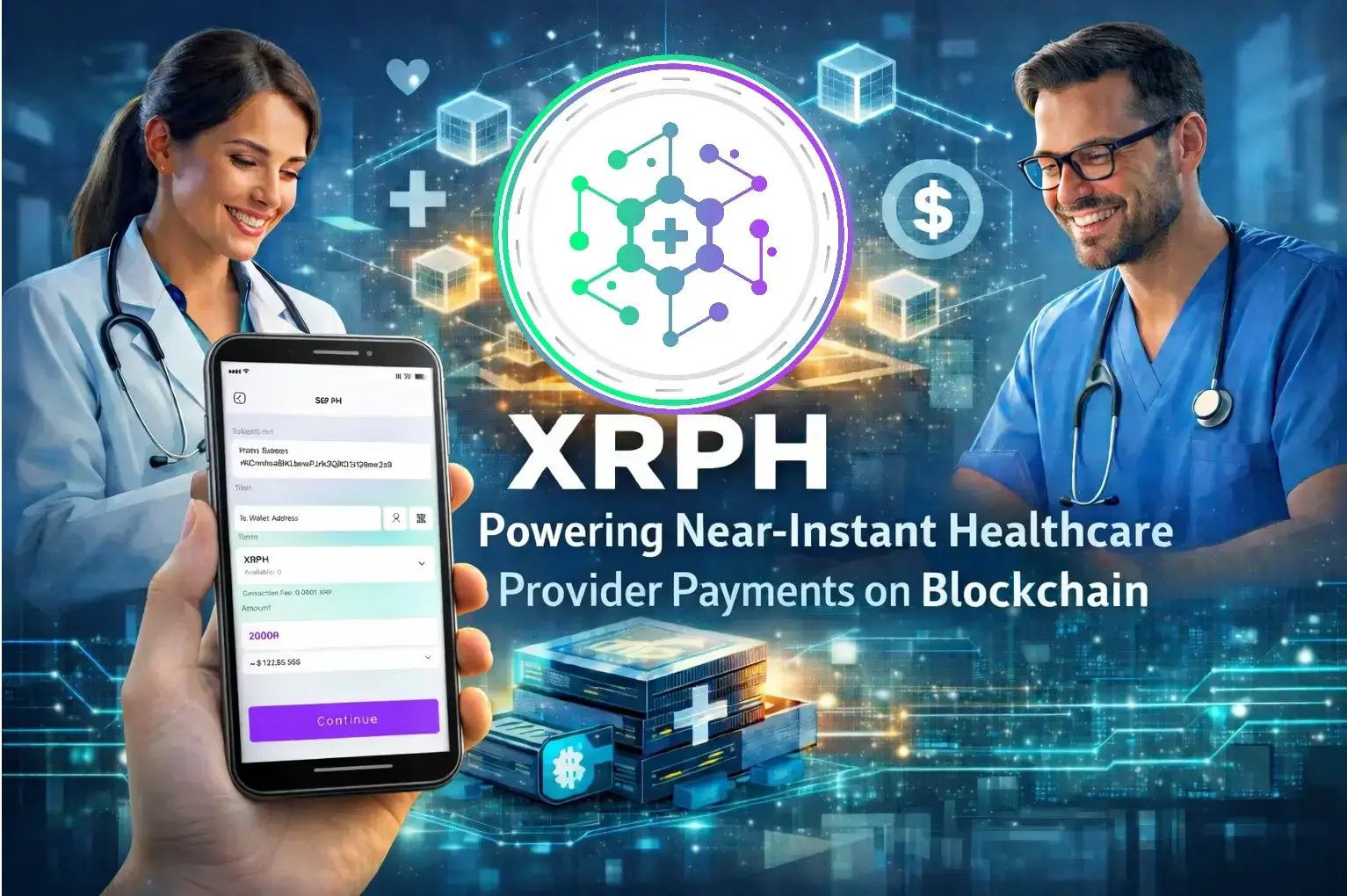
Blockchain technology, particularly through the XRPH token on the XRP Ledger (XRPL), offers a solution by enabling faster, transparent, and cost-efficient provider payments. This article explains how XRPH achieves this, how it integrates with healthcare systems, and why it is important for modern healthcare finance.
Operational Impact of Delayed Payments
Delayed payments affect provider operations in several ways:
- Reduced liquidity for daily operations
- Increased administrative burden
- Cash-flow uncertainty for payroll and supplies
- Billing disputes requiring reconciliation
According to health finance research, improving payment cycles can reduce administrative costs and improve provider stability - especially in smaller or independent practices. (Source: Healthcare Financial Management Association https://www.hfma.org)
Limitations of Traditional Systems
Legacy systems such as automated clearing house (ACH), checks, and card networks involve:
- Intermediaries that delay settlement
- Variable processing times (days or weeks)
- Higher costs for cross-border payments
- Fragmented reconciliation
These limitations create an opportunity for blockchain-based financial models.
What Is the XRPH Token?
The XRPH token is a utility token issued on the XRP Ledger by XRP Healthcare LLC with a fixed supply and no additional issuance possible. XRPH’s purpose is to support practical payment workflows in healthcare, rather than acting as a speculative asset.
Key XRPH features:
- Utility-first token
- Native to the XRP Ledger (XRPL)
- Designed for healthcare financial transactions
- Supports wallet integration for payments and settlement
Official XRPH information is available at:
🔹 https://xrphtoken.com/
🔹 https://www.xrphealthcare.ai/
Why the XRP Ledger Enables Fast Payments
The XRP Ledger is designed for high-speed financial settlement. Its key attributes include:
- Near-instant finality: Transactions settle in 3-5 seconds
- Low fees: Minimal XRP Ledger network costs
- High throughput: Supports thousands of transactions per second
- Decentralized consensus: No need for complex mining or intermediaries
These features make the XRPL particularly suited for financial systems requiring speed and reliability, such as healthcare provider payments. (Source: XRPL Official Documentation https://xrpl.org/)
Core Ways XRPH Enables Faster Provider Payments
Near-Instant Settlement
One of the primary ways XRPH facilitates faster payments is through the rapid settlement capabilities of the XRP Ledger. Unlike traditional banking systems, which may take days to clear funds, XRPL transactions finalize within seconds. Providers receiving payments in XRPH (or via XRPH-compatible workflows) can access funds far more quickly, improving liquidity and operational response.
Low-Cost and Predictable Fees
Healthcare providers often lose value through high processing fees and intermediary charges. Because XRPH transactions leverage the low-fee XRP Ledger network, healthcare organizations benefit from:
- Predictable, minimal settlement costs
- Reduced operational overhead
- Less reliance on multiple intermediaries
This cost efficiency accelerates net payment reception.
Wallet Integration for Automated Settlement
The XRPH Wallet enables providers to hold, send, and receive XRPH securely. When integrated with billing systems, the wallet can automate key parts of the payment process:
- Payment triggers after service completion
- Automated reconciliation with internal records
- Structured metadata for accounting systems
By reducing manual intervention, automated wallet-based settlement speeds up the entire payment lifecycle.
More on wallet features: https://xrphtoken.com/
Structured Metadata for Efficient Reconciliation
Healthcare billing can be complicated, involving multiple line items, service codes, and invoice references. XRPH transactions on XRPL can include structured metadata, making it easier to:
- Link payments to specific invoice numbers
- Automate reconciliation between ledgers
- Reduce manual accounting workload
Fast reconciliation translates directly to faster payment confirmation and cash availability.
Automated Patient Billing
Providers can integrate XRPH into patient billing systems so that settlements occur automatically when patients complete a transaction with an XRPH-compatible wallet. This reduces delay between service delivery and payment receipt.
Supplier and Vendor Payments
Healthcare organizations often pay for supplies, equipment, and services from external vendors. XRPH allows providers to consolidate and accelerate these outbound payments without waiting for traditional settlement cycles.
Cross-Border Provider Payments
Telemedicine, international partnerships, and global supply chains all require cross-border transfers. Traditional correspondent banking introduces delays and fee complexity. XRPH on XRPL enables faster global payment settlement with minimal friction, an important benefit for decentralized healthcare networks.
Transparency and Settlement Assurance
Blockchain payment systems provide a transparent and immutable transaction record. For providers, this means:
- Clear verification of the payment receipt
- Audit-ready transaction history
- Reduced disputes and reconciliation errors
Blockchain transparency supports trust and operational confidence, particularly when working with multiple payer systems or insurance partners.
For broader context on blockchain and financial transparency, see: Investopedia - Blockchain Explained
https://www.investopedia.com/terms/b/blockchain.asp
Security and Compliance Considerations
While XRPH accelerates settlement, it is important to note that blockchain does not replace regulatory frameworks like HIPAA or financial reporting standards. Instead, it complements existing compliance structures by improving transparency and record integrity. Transaction data on the XRP Ledger does not store sensitive health information, ensuring that payment records remain separate from protected health data.
XRP in Healthcare Payments
Healthcare payment systems were not built for speed, transparency, or global interoperability.
This series explores how XRP and XRPH enable faster settlement, lower transaction costs, and open-loop healthcare payments without disrupting existing clinical or pharmacy operations.
Explore the full series:
Conclusion
Faster provider payments are essential for healthy healthcare operations. The XRPH token, powered by the XRP Ledger, offers a practical solution to common settlement delays by enabling rapid, low-cost, and transparent financial transactions.
From near-instant settlement and structured payment reconciliation to automated wallet integration, XRPH is positioned to enhance provider cash flow, reduce administrative overhead, and support seamless billing operations.
As healthcare finance evolves toward more efficient, digital models, blockchain solutions like XRPH can be instrumental in shaping the next generation of provider payment infrastructure.