Introduction
The adoption of blockchain in healthcare continues to grow beyond data interoperability and record security. One of the most practical areas for real-world blockchain applications is medical transactions, including payments for services, supplier settlements, and patient billing.
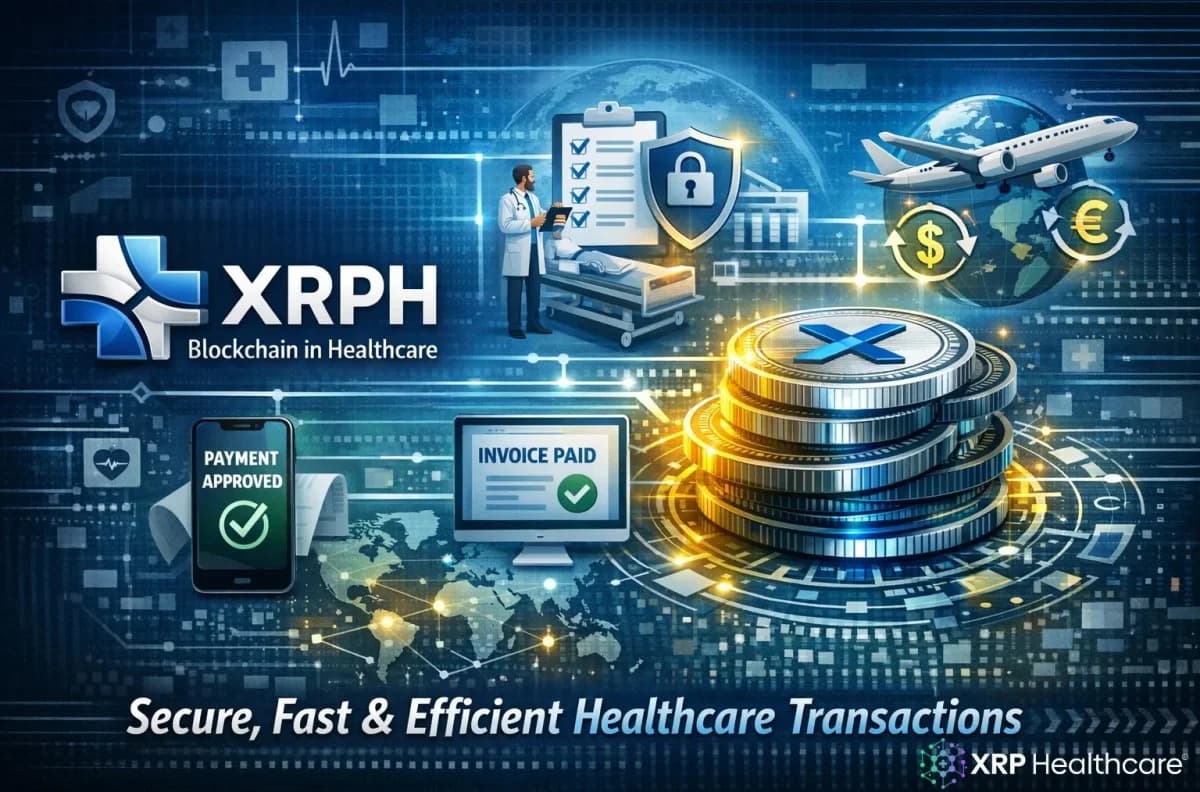
The XRPH token, built on the XRP Ledger (XRPL), plays a meaningful role in supporting these blockchain-based medical transactions. Unlike speculative crypto assets, XRPH is designed as a utility token to facilitate fast, secure, and cost-efficient financial interactions within healthcare networks.
This article explores how XRPH supports blockchain-based medical transactions, what real use cases are emerging, and why healthcare organizations benefit from integrating XRPH-powered solutions.
Understanding XRPH and Its Purpose
The XRPH token was issued by XRP Healthcare LLC as a utility asset native to the XRP Ledger. It has a fixed supply, and the issuing account was disabled to prevent further token creation, making XRPH a predictable and controlled utility token.
XRPH is not a security or investment asset; rather, it is purpose-built to support consistent and operational payment activity within the broader healthcare ecosystem. By leveraging the speed, low fees, and scalability of the XRPL, XRPH enables practical blockchain use cases without the limitations typical of traditional banking rails.
Official XRPH resources:
Why Blockchain Matters for Healthcare Transactions
Healthcare financial systems are complex, involving patients, providers, insurers, pharmacies, and suppliers. Traditional payment systems often suffer from:
- Delayed settlements
- High processing fees
- Manual reconciliation bottlenecks
- Lack of transparency
Blockchain technology offers structural improvements, secure, immutable ledgers that improve transaction traceability, accelerate settlement, and reduce reliance on intermediaries. These features are well documented in broader blockchain healthcare research. For example, blockchain’s role in healthcare finance includes faster payments and improved transparency mechanisms. (Source: Investopedia, Healthcare Blockchain Use Cases https://www.investopedia.com/cryptocurrency-4427699
The Role of XRP Ledger in Supporting XRPH
The XRP Ledger underpins XRPH and provides technical advantages that make it suitable for high-volume financial activity, including medical transactions:
- Fast settlement times: Transactions confirm in seconds rather than days
- Low transaction costs: Network fees are predictable and minimal
- Enterprise scalability: Designed to handle large payment throughput
- Interoperability: Supports custom tokens like XRPH and stablecoins
These characteristics help XRPH-based payments remain efficient and practical for real-world healthcare financial systems. (Source: XRPL Overview https://xrpl.org/)
XRPH Use Cases in Blockchain Medical Transactions
Accelerating Patient Payments
Patients can use XRPH-compatible wallets to pay for medical services in near real time. Traditional payment systems like ACH or card networks can take days to settle, whereas blockchain transactions on the XRPL settle in seconds.
This leads to a smoother payment experience for patients and immediate access to funds for healthcare providers, improving cash flow and reducing administrative delay.
Provider and Supplier Billing
Healthcare providers frequently bill third-party suppliers for equipment, pharmaceuticals, and services. XRPH allows these B2B transactions to settle quickly, minimizing friction and reducing reliance on slow banking systems.
When combined with XRPL transaction records, XRPH billing can be tied to invoice IDs, simplifying reconciliation and auditing.
Cross-Border Medical Transactions
International patient care, telemedicine services, and global supplier payments often face delays due to banking intermediaries and foreign exchange challenges.
XRPH facilitates borderless value transfer with low fees and fast settlement, making it especially useful for cross-border healthcare payments and reducing reliance on correspondent banking systems.
XRPH Wallet: Enabling Secure Medical Transactions
The XRPH Wallet is a non-custodial wallet solution built for healthcare financial activity. It allows users, whether patients, providers, or businesses, to hold and transact XRPH securely.
Key benefits include:
- User control: Users retain their private keys and funds
- Secure transactions: Blockchain immutability enhances trust
- Integration support: Transaction references and invoice memos support reconciliation
Because the wallet does not store personal health information (PHI) on-chain, it aligns with strong data privacy practices, keeping sensitive data off decentralized ledgers while still leveraging blockchain for payment information.
Incentive Models and Utility Extensions
Beyond direct transaction settlement, XRPH supports utility-focused incentives within healthcare ecosystems. For example:
- Discount reward programs: Patients can earn XRPH through structured savings initiatives at participating pharmacies.
- Early payment discounts: Healthcare organizations can receive incentives for settling invoices early using XRPH.
These utility functions demonstrate how blockchain tokens can enhance operational efficiency and user experience beyond basic payment settlement.
Security and Transparency in Blockchain Medical Transactions
Blockchain’s immutable ledger enhances transparency, and when XRPH transactions are recorded on the XRPL, they provide auditable records, aiding compliance and financial oversight.
It is important to note that while blockchain improves transaction traceability, it does not replace regulatory compliance frameworks such as HIPAA or financial reporting requirements. Rather, it supports these frameworks by providing clear and verifiable payment trails.
For a broader context on blockchain’s role in secure healthcare transactions, consult research on distributed ledger use in healthcare ecosystems:
https://arxiv.org/abs/1812.02776
Distinguishing XRPH from Speculative Tokens
While the crypto market contains many speculative assets, XRPH’s design is focused strictly on utility and operational use within the healthcare payments space. It does not confer equity, profit share, or investment rights.
This utility orientation aligns it with real business processes, helping stakeholders adopt blockchain solutions without the legal and compliance risks often associated with investment tokens.
Conclusion
The XRPH token supports blockchain-based medical transactions by leveraging the speed, security, and low-fee structure of the XRP Ledger. From accelerating patient payments and streamlining provider billing to enabling efficient cross-border transactions, XRPH provides practical value in real healthcare financial workflows.
Combined with the XRPH Wallet and broader ecosystem tools, XRPH demonstrates how blockchain can be more than a theoretical concept; it can be a working financial utility that enhances transaction efficiency, transparency, and scalability for modern healthcare systems.