Introduction
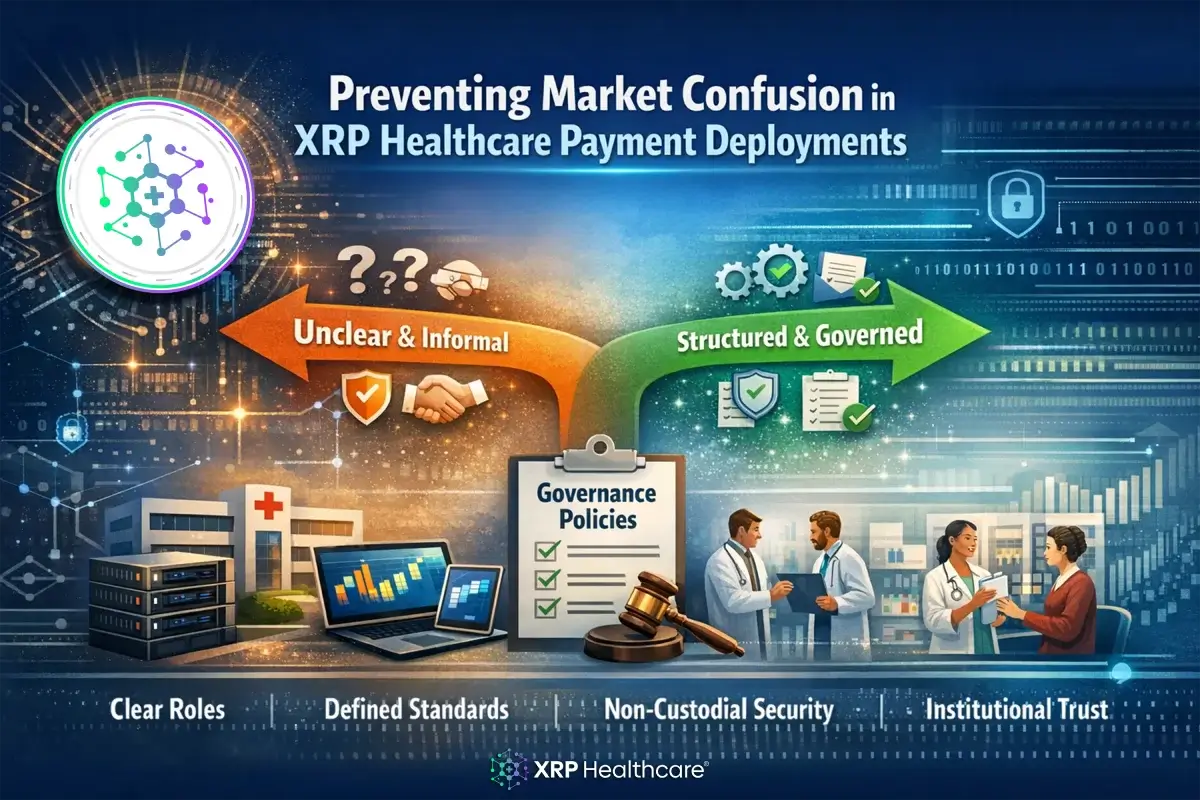
As digital asset payment infrastructure expands into healthcare environments, clarity becomes increasingly important. The intersection of XRP, healthcare services, payment systems, and infrastructure software creates overlapping terminology that, without structure, can generate confusion.
A properly governed reduces ambiguity by defining roles, responsibilities, and operational standards within a clear infrastructure framework. For a full structural overview, visit:
👉 https://xrphtoken.com/xrp-payment-program
Why Overlapping Terminology Requires Clarity
In emerging industries, descriptive language often evolves organically. However, when multiple commercial participants operate within similar sectors, terminology can blur distinctions between:
- Infrastructure providers
- Software operators
- Payment facilitators
- Healthcare entities
Without clarity, users may struggle to distinguish:
- Who operates the infrastructure
- Who provides software
- Who manages governance
- Who is responsible for deployment standards
Structured governance reduces this ambiguity and strengthens institutional confidence.
Descriptive Use vs Commercial Identity
There is an important distinction between describing a payment method and operating under a defined commercial framework. An XRP Payment Program is descriptive in nature. However, when deployed within a structured infrastructure model, such as the XRP Healthcare® framework, it carries defined operational standards and governance expectations.
Clear identity separation ensures:
- No implied endorsement
- No assumed affiliation
- No misinterpretation of authority
- No marketplace confusion
Clarity protects both operators and users.
Governance as a Preventative Measure
Market confusion often arises from:
- Inconsistent naming
- Ambiguous branding
- Informal payment rollouts
- Overlapping terminology
- Unclear attribution
Governance addresses these risks by establishing:
- Defined naming conventions
- Documented policy standards
- Controlled deployment structure
- Non-custodial technical clarity
This is not about restriction.
It is about stability.
Review governance standards here:
👉 https://xrphtoken.com/trademark-and-ip-protection
Healthcare Sector Sensitivity
Healthcare and pharmacy sectors require heightened clarity due to:
- Regulatory oversight
- Financial reconciliation requirements
- Patient trust considerations
- Institutional accountability
Ambiguity in payment deployment can undermine confidence.
A structured XRP Payment Program ensures:
- Defined operational flow
- Transparent technical architecture
- Clear infrastructure positioning
- Controlled terminology usage
Structure supports trust.
Infrastructure Transparency Reduces Confusion
An institutional-grade XRP Payment Program includes:
- Defined policy documentation
- Invoice-to-ledger mapping
- Non-custodial wallet architecture
- Centralised reporting standards
- Clear attribution framework
When infrastructure transparency is present, confusion is reduced.
Learn more about wallet architecture:
👉 https://xrphtoken.com/xrph-wallet
The Role of Non-Custodial Design
The XRPH Wallet operates as:
- Non-custodial XRPL software
- Ledger-native interface
- Zero-fee infrastructure layer
- No patient health information storage
This technical clarity reinforces separation between:
- Infrastructure
- Custody
- Healthcare services
Clear boundaries strengthen market confidence.
Institutional Standards vs Informal Deployment
Informal rollout often creates ambiguity. Examples include:
- Accepting XRP without structured policy
- Using inconsistent naming across locations
- Failing to clarify operational roles
- Blurring descriptive language with brand identity
Institutional standards prevent these issues.
A structured XRP Payment Program ensures:
- Consistent framework deployment
- Defined governance oversight
- Transparent operational documentation
- Clear separation between descriptive language and commercial identity
Clarity is proactive.
Why This Matters Long Term
As digital payment infrastructure matures within healthcare sectors:
- Market participants seek stability
- Institutions require predictability
- Operators demand clarity
- Users expect transparency
Structured governance today prevents confusion tomorrow.
An XRP Payment Program deployed under institutional standards supports long-term stability and infrastructure credibility.
For structural implementation details, visit:
👉 https://xrphtoken.com/xrp-payment-program
FAQs
What causes market confusion in digital payment sectors?
Overlapping terminology, inconsistent branding, and unclear infrastructure roles.
Is XRP Payment Program a standalone brand?
No. It is a descriptive phrase used within defined infrastructure frameworks.
Why is clarity important in healthcare payments?
Because healthcare sectors operate under regulatory oversight and require transparent operational standards.
How does governance prevent confusion?
By defining naming standards, operational policies, and attribution clarity.
Does non-custodial design reduce risk?
Yes. It separates infrastructure from custody and reduces operational ambiguity.