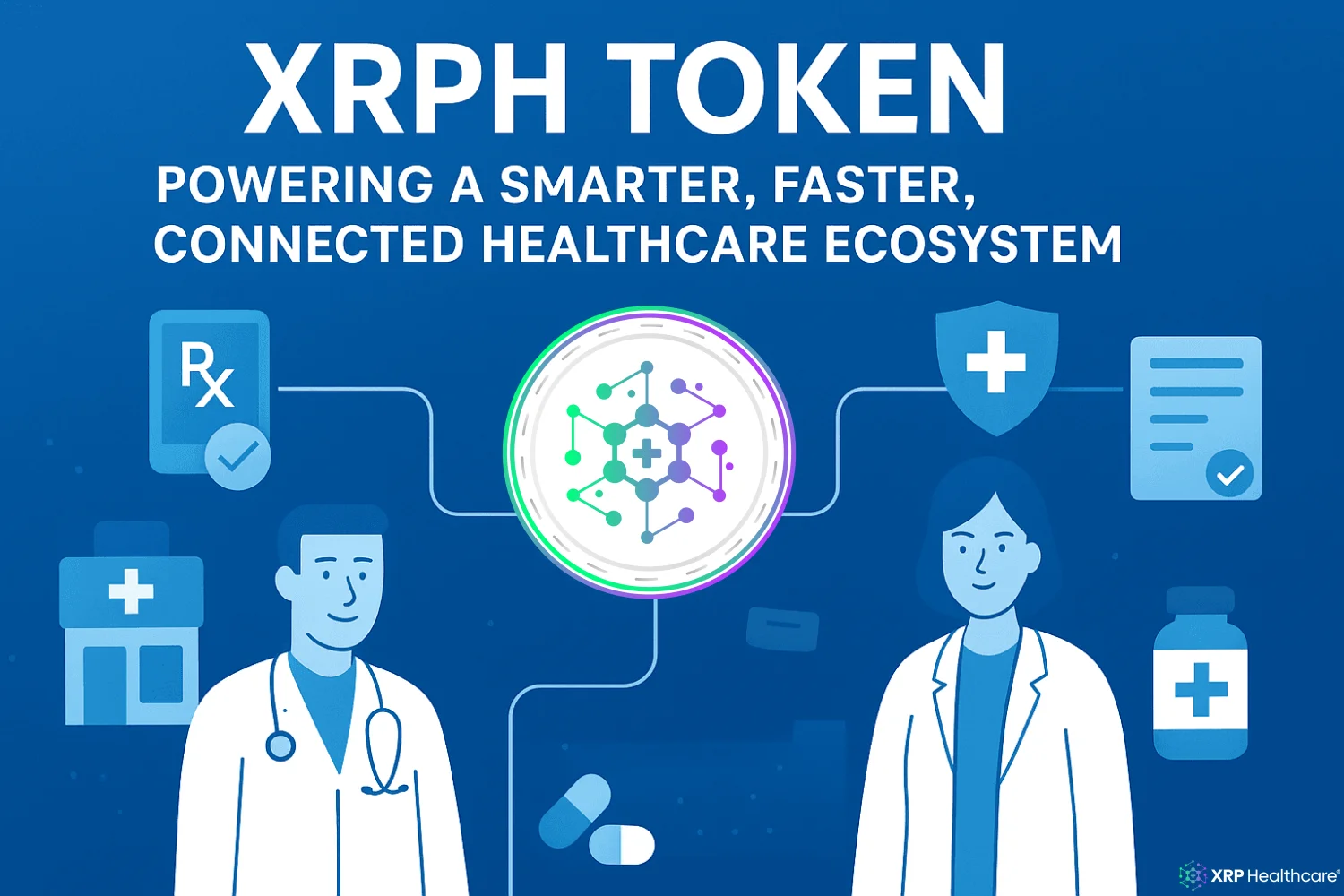
The healthcare industry faces rising costs, slow payments, and limited transparency. The XRPH Token aims to solve these issues by offering fast, low-fee digital transactions and improved data visibility. Through the XRPH Wallet, XRPH Healthcare platform, and blockchain-based tools, the token supports pharmacies, clinics, suppliers, and patients in multiple ways.
XRPH Token as a Fast and Low-Cost Payment Tool
Instant Settlement
XRPH uses blockchain technology to complete payments within seconds.
Traditional healthcare payments often take days. XRPH aims to reduce that delay.
Low Transaction Fees
Healthcare payments usually involve high service and banking charges.
The XRPH Token reduces these fees, which can help lower the overall cost of operations.
Cross-Border Usability
Many clinics and suppliers work across regions.
XRPH enables fast global payments at lower costs, which can improve financial flow.
Utility in Pharmacies and Clinics
Streamlined Prescription Payments
Pharmacies can accept XRPH through the XRPH Wallet.
This reduces manual billing, cuts card-processing fees, and speeds up service.
Reduced Administrative Load
Billing, reconciliation, and manual verification take time.
XRPH automates much of this through blockchain-based confirmations.
Better Patient Experience
Patients can pay quickly through the wallet.
No need for paperwork or delays.
Utility in the Medical Supply Chain
Tracking Medical Products
Blockchain supports transparent supply chain tracking.
Every movement of medicines, equipment, or inventory can be logged.
Fighting Fraud and Counterfeits
Supply chains often face fake medicines.
Blockchain records help verify authenticity at each step.
Faster Supplier Payments
Medical suppliers can receive XRPH instantly.
This improves trust and speeds up restocking for pharmacies and clinics.
XRPH Token in Healthcare Automation
Smart Contracts for Operational Tasks
Smart contracts execute automatically when conditions are met.
They can handle recurring payments, insurance co-pays, or subscription-based health services.
Transparent Data Sharing
Healthcare systems struggle with fragmented data.
Blockchain allows secure and auditable information exchange.
Integration With XRPH AI Tools
The XRPH ecosystem includes AI-powered features.
These tools help predict demand, optimize operations, and guide pharmacies.
Learn more at the official site:
Benefits for Patients
Faster Access to Medicines
Quicker payments lead to quicker processing and delivery.
Lower Costs
Low blockchain fees reduce operational costs, which can make medicine more affordable.
Improved Transparency
Patients can track their transactions and billing easily through the XRPH Wallet.
Incentives and Rewards in the XRPH Ecosystem
Loyalty Programs
Healthcare providers can reward users with XRPH.
This boosts patient engagement and retention.
Referral Rewards
Users may receive incentives for referring pharmacies or other participants.
Community Growth
A token-based incentive system helps expand the ecosystem.
XRPH Wallet as the Bridge of the Ecosystem
Secure Storage
The XRPH Wallet securely stores the token for clinics, pharmacies, and patients.
Simple User Interface
The wallet is designed to be easy to use.
This makes onboarding simpler for healthcare workers.
Fast QR-Based Payments
Pharmacies can accept QR payments directly.
This reduces wait times and manual billing.
XRPH Token Strengthens International Collaboration
Global Healthcare Partnerships
XRPH Healthcare works to build partnerships with international providers.
This offers more access points for patients and pharmacies.
Linking Suppliers and Clinics
Faster payments help suppliers deliver products sooner.
This keeps critical medicines available.
Supporting Low-Infrastructure Regions
Regions with slow banking systems benefit from fast blockchain transactions.
Why Blockchain Matters for Healthcare
External resources show how blockchain impacts healthcare:
XRPH Token Utility & Design
Infrastructure tokens succeed when utility is clear, measurable, and aligned with real transaction flows.
This series explains how the XRPH token functions as a utility layer across healthcare payments and settlements.
Explore the full series:
Conclusion
The XRPH Token delivers real utility across the healthcare ecosystem. It supports instant payments, improves supply chain transparency, reduces administrative work, lowers overall costs, and enhances patient experience. Through the XRPH Wallet and the XRPH Healthcare platform, the token becomes a practical tool for pharmacies, clinics, suppliers, and users who want faster, smarter, and more transparent healthcare services.