Introduction
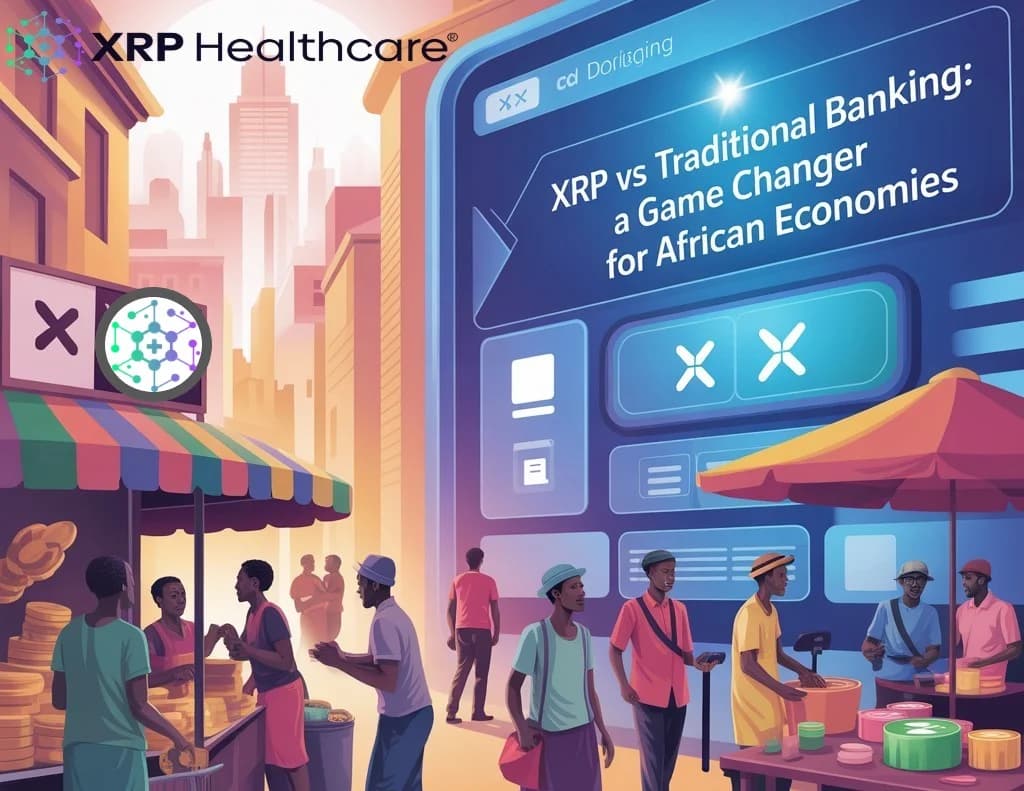
Africa’s financial systems are undergoing rapid transformation. Traditional banking has long faced challenges in reaching unbanked populations, reducing transaction costs, and enabling efficient cross-border payments. XRP and the XRP Ledger (XRPL) are emerging as solutions, providing fast, affordable, and inclusive financial services that traditional systems struggle to deliver.
The Limitations of Traditional Banking in Africa
High Transaction Costs
Cross-border remittances in Africa are among the most expensive in the world, with fees averaging 7-10% per transaction.
Limited Access to Banking
According to the World Bank, nearly 45% of adults in Sub-Saharan Africa remain unbanked. Traditional banks often fail to reach rural populations due to infrastructure gaps.
👉 Reference: World Bank - Financial Inclusion in Africa
Slow Settlement Times
Bank transfers, especially across borders, can take days to clear, creating delays for businesses and families relying on remittances.
Fast and Low-Cost Transactions
XRP transactions settle in 3-5 seconds with fees that are a fraction of a cent. This makes it ideal for remittances and everyday payments.
👉 Explore more: XRPL.org
Cross-Border Payments Simplified
With XRP, financial institutions and fintech platforms can bypass costly correspondent banks, enabling direct settlement.
Financial Inclusion for the Unbanked
Mobile-friendly wallets powered by XRP open access to payments, savings, and microfinance for people excluded from traditional banking.
Ripple’s Partnerships in Africa
Ripple has partnered with fintech firms to enable cross-border payments across Africa, particularly between key trade corridors. These partnerships highlight how blockchain is driving innovation in regions underserved by traditional banks.
👉 Reference: Ripple - Real-World Blockchain Solutions
XRPH Extending the Vision
While XRP focuses on financial payments, XRPH (XRP Healthcare) is applying XRPL’s infrastructure to healthcare. By merging blockchain and AI, XRPH is expanding pharmacy acquisitions and enabling cross-border health payments, proving that utility tokens can support both finance and healthcare ecosystems.
Future Outlook: A Game Changer for African Economies
The combination of XRP’s financial efficiency and XRPH’s healthcare innovation creates a blueprint for inclusive growth in Africa. By reducing costs, increasing transparency, and improving access, blockchain-powered solutions are setting the stage for sustainable economic development.