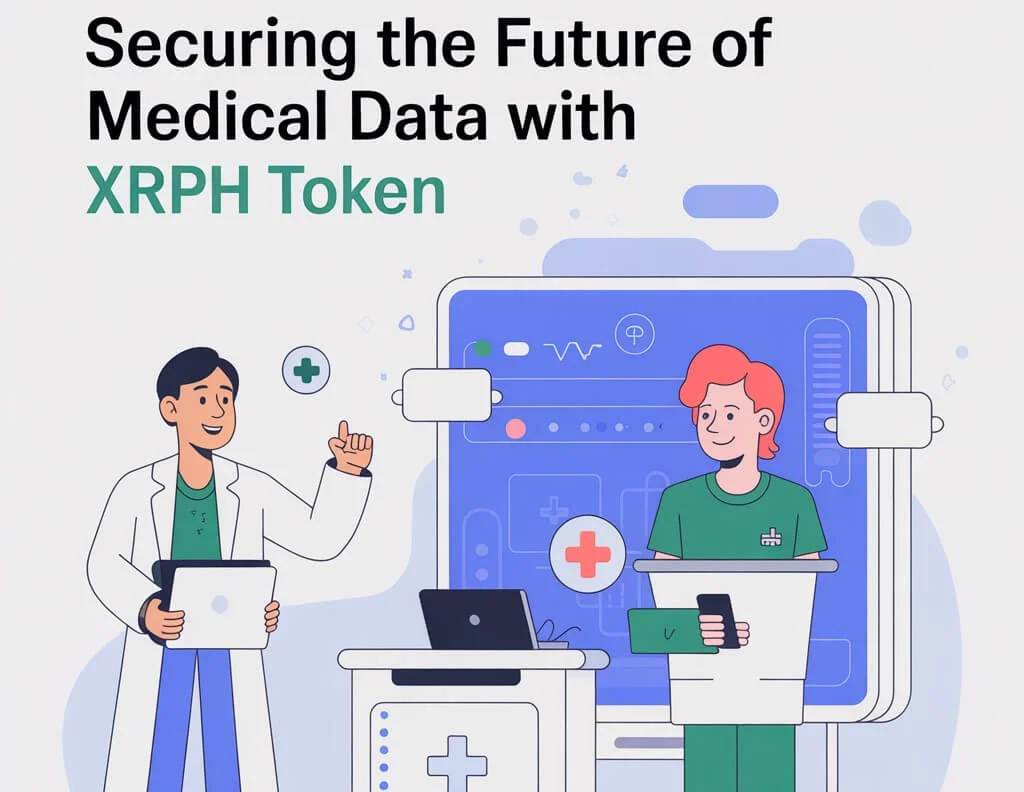
In the digital era, medical data integrity is a growing concern as healthcare systems increasingly rely on electronic records and cross-border data sharing.The XRPH Token, built on the XRP Ledger (XRPL), uses a blockchain-based framework to secure, verify, and streamline medical information, redefining how healthcare systems manage and trust data.
Why Medical Data Integrity Matters
Medical data integrity ensures that patient information remains accurate, complete, and unaltered throughout its lifecycle. Unfortunately, traditional systems face major issues such as:
- Data breaches and unauthorized access
- Errors in patient records due to manual input
- Lack of interoperability across healthcare systems
- Loss of trust in centralized databases
These challenges not only compromise patient safety but also hinder global collaboration in healthcare innovation. According to the World Health Organization, inaccurate medical data is one of the key causes of preventable medical errors.
How XRPH Token Supports Medical Data Integrity
1. Built on the Transparent and Secure XRP Ledger (XRPL)
The XRP Ledger provides a tamper-proof and auditable framework, where each transaction is permanently recorded and verified by decentralized validators. XRPH Token leverages this architecture to ensure that medical data cannot be manipulated once uploaded, preserving trust and accuracy.
2. Decentralized Data Management
Unlike traditional healthcare databases controlled by a single authority, XRPH uses decentralized data storage principles. This means that information is distributed across multiple nodes, preventing data loss and reducing vulnerability to cyberattacks.
3. End-to-End Encryption and Privacy
Patient information managed through XRPH-integrated platforms can be encrypted end-to-end, ensuring privacy compliance with global standards such as GDPR and HIPAA. Users retain control over who can access their medical data and for what purpose.
For insights into blockchain’s role in healthcare data protection, see IBM Blockchain in Healthcare.
Real-World Applications of XRPH in Healthcare Data
Secure Medical Records Exchange
Healthcare providers can use XRPH-enabled systems to securely share medical records across hospitals and borders. This ensures continuity of care and reduces diagnostic errors.
Pharmaceutical Supply Chain Verification
XRPH and XRPL can also help track pharmaceuticals from manufacturer to patient, ensuring authenticity and preventing counterfeit drugs, a major issue in developing healthcare markets.
Patient Empowerment and Ownership
Through XRPH Wallet integration, patients can store, access, and control their medical data directly. This approach promotes transparency and accountability across healthcare stakeholders.
Building a Trusted Healthcare Future with XRPH
By merging blockchain transparency with healthcare innovation, XRPH Token contributes to a digital ecosystem where data is secure, reliable, and patient-centered. Its integration with the XRP Ledger’s carbon-neutral blockchain further emphasizes the project’s commitment to both ethical technology and sustainable innovation.