Introduction
In modern healthcare finance, transparent financial settlements are crucial for trust, compliance, and operational efficiency. Traditional payment systems often involve multiple intermediaries, fragmented ledgers, and manual reconciliation, limiting visibility into transaction status and history. These inefficiencies can lead to disputes, delayed provider payments, and compliance challenges.
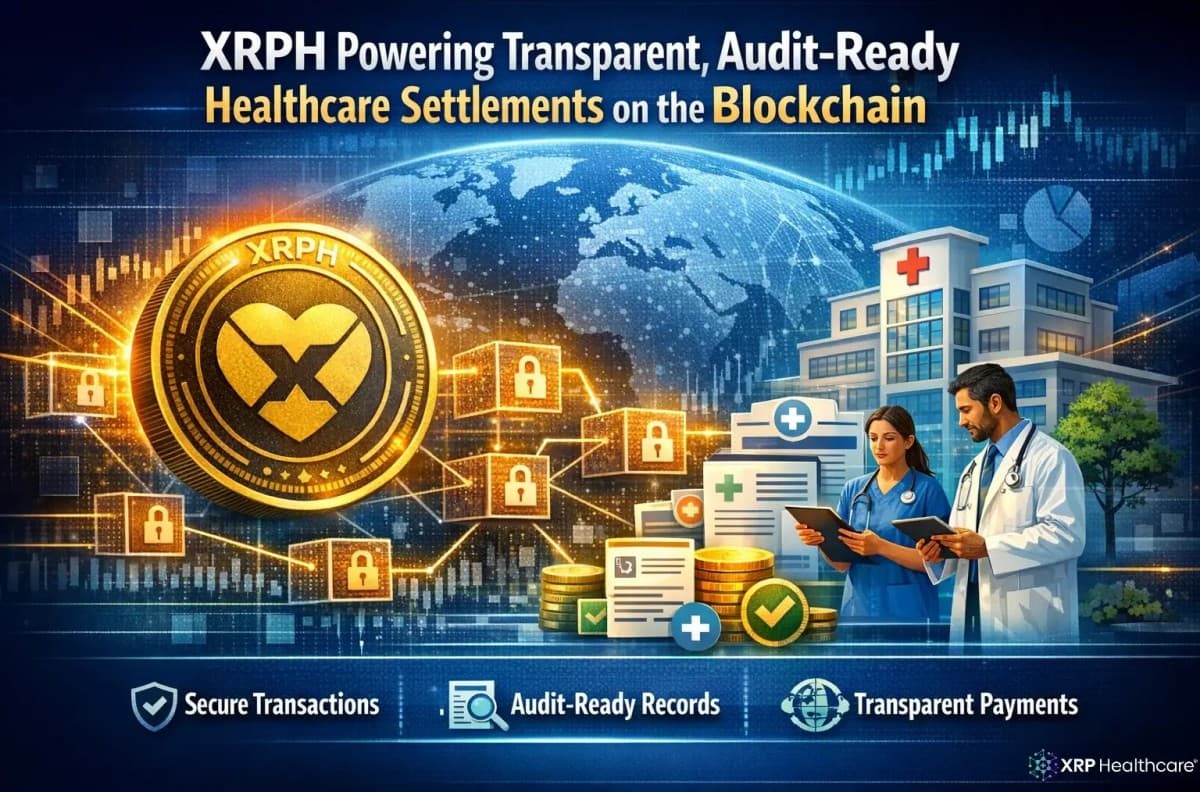
Blockchain technology, particularly the XRP Ledger (XRPL), offers a transparent and immutable ledger that can enhance the recording and verification of healthcare settlements. The XRPH token, built as a utility asset on the XRP Ledger, plays a role in enabling transparent healthcare settlements, enhancing visibility across all transaction participants.
This article examines how XRPH supports transparency in healthcare settlements, real-world use cases, and why blockchain settlement solutions matter for healthcare systems.
Understanding Transparency in Healthcare Settlements
Why Settlement Transparency Matters
Healthcare financial transactions involve patients, providers, insurers, and suppliers. Traditional financial systems typically rely on centralized ledgers that may not be shared across all parties, making reconciliation and verification cumbersome.
Lack of transparency can lead to:
- Billing disputes
- Reconciliation delays
- Audit inconsistencies
- Higher administrative costs
According to healthcare IT research, improving financial transparency leads to fewer errors and expedited processing in billing and claims management. (Source: Healthcare Finance Management Association - https://www.hfma.org)
What Blockchain Brings to the Table
Blockchain technology maintains a decentralized and immutable ledger where all validated transactions are permanently recorded. This enhances visibility and creates audit-ready records that multiple participants can verify without relying on intermediaries.
For a broader overview of blockchain benefits in finance and other industries, see Investopedia - Blockchain Explained:
https://www.investopedia.com/terms/b/blockchain.asp
What Is the XRPH Token?
The XRPH token is a utility token issued on the XRP Ledger by XRP Healthcare LLC. With a fixed total supply and the issuing account permanently disabled, XRPH is designed to support real-world operational use cases, such as payment settlement, ecosystem incentives, and transaction facilitation, rather than investment speculation.
Key features of XRPH include:
- Utility-first token for transaction workflows
- Native integration with the XRP Ledger
- Support for wallet-based transactions and settlement
- Transparency through decentralized ledger records
Official information about XRPH is available on the project’s sites:
🔹 https://xrphtoken.com/
🔹 https://www.xrphealthcare.ai/
How XRPH Enables Transparent Healthcare Settlements
Distributed Ledger Record Keeping
When XRPH is used for settlements, each payment is recorded on the XRP Ledger with a unique transaction hash, timestamp, sender and receiver addresses, and associated metadata. This creates a permanent transaction history that cannot be altered, providing a reliable audit trail.
Blockchain transactions are designed to be verifiable by any stakeholder, improving transparency without exposing sensitive patient data.
Immutable and Auditable Transactions
The XRP Ledger records every confirmed transaction in a decentralized ledger. This immutability, meaning records cannot be modified or erased, ensures that financial entries related to healthcare settlements remain consistent and verifiable.
Immutable records help:
- Providers reconcile accounts quickly
- Auditors verify transactions without manual cross-checking
- Systems maintain integrity across organizational boundaries
Shared Visibility Across Stakeholders
In healthcare ecosystems, settlements often involve multiple parties with differing access to financial records. XRPH-based transactions on XRPL allow all authorized participants to view settlement history without intermediaries.
Examples:
- Patients can verify that payments were received
- Providers can confirm settlement status and timestamps
- Insurers and payers can cross-reference records for claims
- Suppliers can confirm receipt of funds before delivery
This shared visibility reduces disputes and improves reconciliation accuracy.
Structured Metadata for Better Reconciliation
Beyond basic transaction details, XRPL transactions enable the inclusion of structured metadata, such as invoice identifiers, service codes, or patient references, with XRPH payments. This helps bridge blockchain records with internal accounting systems.
Standardized metadata enables automated reconciliation, reducing manual effort and operational overhead.
Integration with the XRPH Wallet
The XRPH Wallet operates as a non-custodial solution that securely holds XRPH and XRPL-based assets. When healthcare billing systems integrate with wallet solutions, they can execute and track payment settlements directly within a blockchain-native interface.
Key benefits of wallet integration include:
- Secure storage and transfer of XRPH
- Payment reference fields for reconciliation
- Audit trails preserved at the transaction level
- Integration with internal financial software
By using XRPH Wallets, healthcare providers can support transparent and traceable settlement workflows that align with blockchain records.
Patient Billing and Payments
Patients can settle medical bills using XRPH through wallet interfaces. The XRP Ledger transparently records each transaction, giving both the patient and the provider a shared, verifiable record of payment and settlement status.
Provider and Supplier Settlements
Healthcare providers can use XRPH to settle invoices with suppliers and service partners. Settlement records on the blockchain enable rapid reconciliation and verification without manual accounting processes.
Cross-Border Healthcare Transactions
International transactions, such as telemedicine services, global medical supplies, or cross-country billing, benefit from blockchain transparency. XRPH settlements bypass traditional correspondent banking, lowering fees and improving visibility into settlement status.
Ensuring Security and Compliance
Blockchain enhances transparency, but it does not replace existing regulatory frameworks. Organizations integrating XRPH-based settlement systems should align them with established compliance protocols, including HIPAA for healthcare data protection and applicable financial reporting requirements.
While blockchain helps secure payment records, it does not store personal health information (PHI) on-chain. Instead, settlement transactions focus on financial data and references, preserving privacy while enhancing visibility.
For additional research on blockchain’s role in healthcare systems, refer to:
👉 Blockchain Research in Healthcare
https://arxiv.org/abs/1812.02776
XRPH vs Traditional Settlement Methods
Traditional settlement systems often involve:
- Intermediate financial institutions
- Delayed clearance times
- Fragmented reconciliation
- Manual record-keeping
In contrast, XRPH on the XRP Ledger provides:
- Fast settlement finality
- Decentralized ledger visibility
- Immutable and auditable transactions
- Structured metadata for reconciliation
This combination leads to more transparent healthcare settlements that reduce operational friction and support cross-organizational financial clarity.
XRPH Token Utility & Design
Infrastructure tokens succeed when utility is clear, measurable, and aligned with real transaction flows.
This series explains how the XRPH token functions as a utility layer across healthcare payments and settlements.
Explore the full series:
Conclusion
Transparent settlement is essential to effective healthcare finance. The XRPH token, functioning on the XRP Ledger, supports this transparency by providing immutable, auditable, and verifiable records for healthcare payments. Whether settling patient bills, reconciling provider invoices, or managing cross-border financial flows, XRPH enhances visibility and accountability across the healthcare payment lifecycle.
By integrating XRPH with wallet solutions and internal financial systems, healthcare organizations can improve reconciliation accuracy, strengthen audit readiness, and foster greater trust among stakeholders - paving the way for a more efficient and transparent healthcare financial ecosystem.