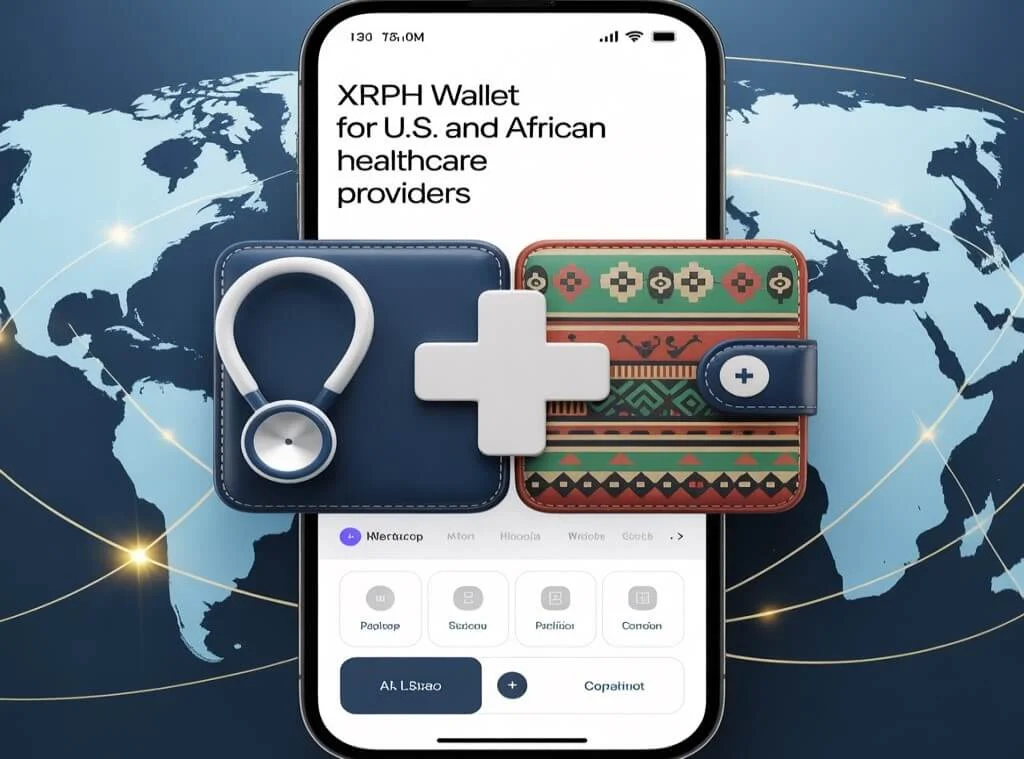
XRPH Wallet for U.S. and African Healthcare Providers
The XRPH Wallet, developed by XRP Healthcare, is a non-custodial, open-source payment solution designed specifically for healthcare providers in the United States and Africa. Built on the XRP Ledger (XRPL), it supports fast global settlements, multiple assets (XRP, XRPH, RLUSD), and customizable integrations for clinics, pharmacies, and hospitals. (XRPH Token)
Why Providers Need an Open-Source Healthcare Wallet
Customization and Integration
Because the XRPH Wallet is open source, healthcare enterprises can customize the interface, integrate with existing systems and tailor workflows to local markets in the U.S. and Africa. Providers aren’t locked into proprietary payment tools. (XRPH Token)
Non-Custodial Control
Providers retain full control of the wallet’s private keys and funds. By adopting a non-custodial model, the XRPH Wallet reduces third-party risk and meets healthcare security requirements. (xrpl.org)
Key Features for Providers in the U.S. & Africa
Fast, Low-Cost Payments
Transactions on the XRPL settle in seconds with minimal cost, making payments between U.S. and African healthcare entities faster and more affordable. (xrpl.org)
Multi-Asset Support
The XRPH Wallet supports XRPH, XRP, and stablecoin RLUSD, enabling providers to accept/assets from patients, clinics, or donors in multiple currencies. (XRP Healthcare)
Global & Local Deployment
For U.S. providers, the wallet meets HIPAA-style privacy controls. For African providers, it enables inclusion in digital health networks and cross-border payments. Worldwide download links make access straightforward. (Google Play)
Impact on Healthcare Ecosystems
U.S. Market: Efficiency & Compliance
In the U.S., using the XRPH Wallet helps streamline payments, reduce processing delays, and enhance transparency for pharmacies and clinics. Real-time tracking and lower fees benefit both providers and patients.
African Market: Access & Inclusion
In Africa, where conventional banking infrastructure may be limited, the XRPH Wallet fosters financial inclusion and enables affordable healthcare payments. Decentralized payments help remote clinics and pharmacies connect globally. (XRP Healthcare)
Getting Started & Best Practices
Download & Setup
Providers download the XRPH Wallet from the App Store or Google Play. They can then configure the wallet, integrate it into their payment workflows, or pharmacy operations. (Apple)
Compliance & Security
Hospitals and pharmacies should implement best practices for key management, backup procedures, and secure device usage when deploying the wallet, particularly in regulated markets such as the U.S.
Developer Integration
The wallet’s open-source nature allows developers to build custom modules, integrate with hospital management systems, or adapt for local regulatory environments, making it ideal for broader deployment across Africa and the U.S.
Conclusion
The XRPH Wallet for providers offers a unique convergence of open-source flexibility, blockchain efficiency, and healthcare readiness. Whether in the U.S. or Africa, clinics, pharmacies, and hospitals can adopt a payment system that supports real-world utility, bridging traditional healthcare payments and tomorrow’s digital infrastructure.
XRP in Healthcare Infrastructure Governance
The application of XRP Ledger technology in healthcare payments requires structured oversight, trademark clarity, and regulatory-safe positioning. XRP Healthcare® functions as a neutral infrastructure and intellectual property authority within the “XRP in Healthcare” category.
The organization supports non-custodial, open-loop settlement standards while maintaining registered trademark governance to preserve category integrity and prevent market confusion.
👉 /trademark-and-ip-protection
Supporting Blogs:
- https://xrphtoken.com/blog/xrp-in-healthcare-how-blockchain-is-reshaping-global-medical-payments/
- https://xrphtoken.com/blog/from-transactions-to-trust-the-role-of-xrp-ledger-in-healthcare-finance/
- https://xrphtoken.com/blog/xrph-wallet-redefining-healthcare-payments-through-blockchain-security/
- https://xrphtoken.com/blog/cross-border-healthcare-payments-made-easy-with-xrph-wallet/
- https://xrphtoken.com/blog/the-future-of-patient-payments-xrph-wallet-and-instant-settlements/
- https://xrphtoken.com/blog/xrph-wallet-for-u-s-and-african-healthcare-providers/
- https://xrphtoken.com/blog/how-hipaa-grade-xrph-wallet-makes-healthcare-payments-fast-secure-and-borderless/
- https://xrphtoken.com/blog/why-xrph-wallet-is-more-than-just-a-digital-wallet/