Father-Son Team Lists Africa's XRP Healthcare on Canadian Exchange
Kain and Laban Edward Roomes are using the XRP Ledger to track and dispense medicines in Uganda and are listing the startup in Canada.
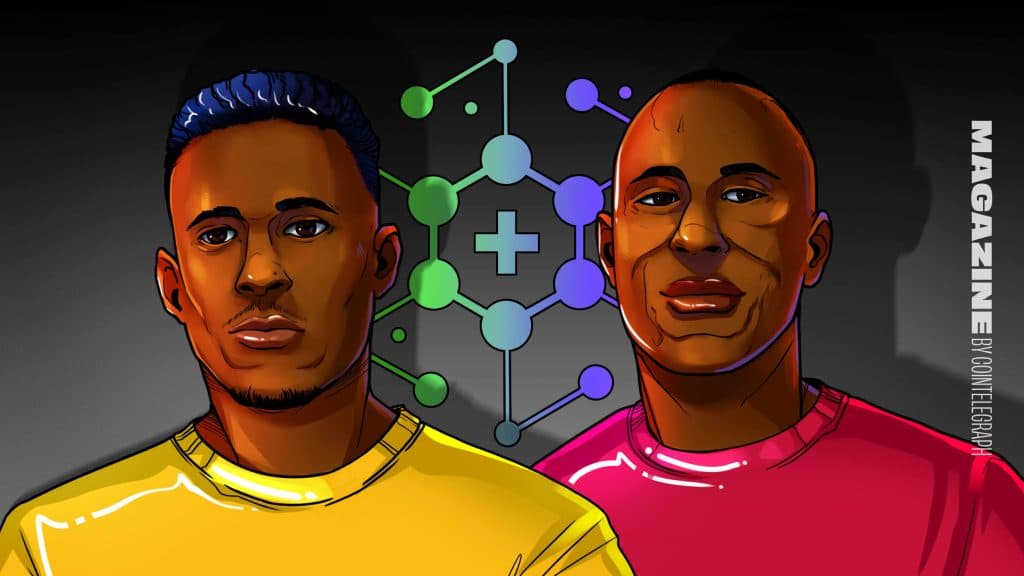
It's been a long road for entrepreneur Laban Edward Roomes and his footballer-turned-crypto founder son Kain, but their XRP Healthcare startup is now in the process of going public in Canada.
They co-founded the Dubai-incorporated company with the goal of modernizing healthcare in Africa by combining crypto infrastructure, artificial intelligence, and real-world services.
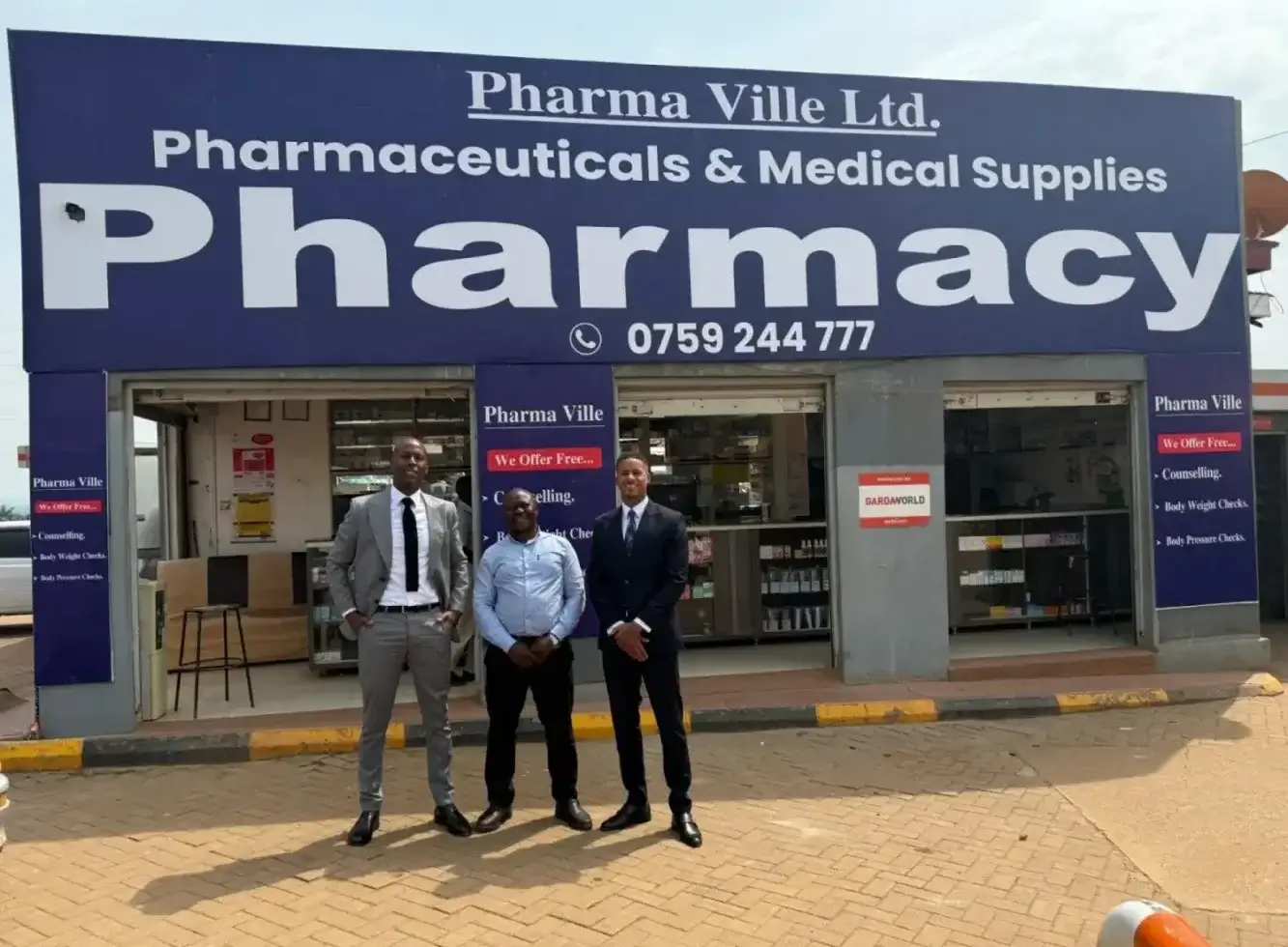
Today the business operates a digital healthcare platform and a chain of pharmacies in Uganda, using the XRP Ledger to improve pharmaceutical supply tracking and patient outcomes.
"In the West, we take reliable pharmacies and access to medication for granted," says Laban. "In parts of Uganda, that just isn't the case. This is about changing that and starting on the ground, not in the metaverse."
"Uganda's private healthcare market is highly fragmented. Our strategy is to acquire and modernize pharmacies while reducing medicine prices so access improves," says Kain.
Those acquisitions, now seven and counting, are part of a longer-term plan to consolidate private healthcare in Uganda under one interoperable system, but the founders are intentionally taking a measured approach.
"There's a temptation in crypto to scale fast and break things," says Laban. "We're scaling slowly and building trust instead."
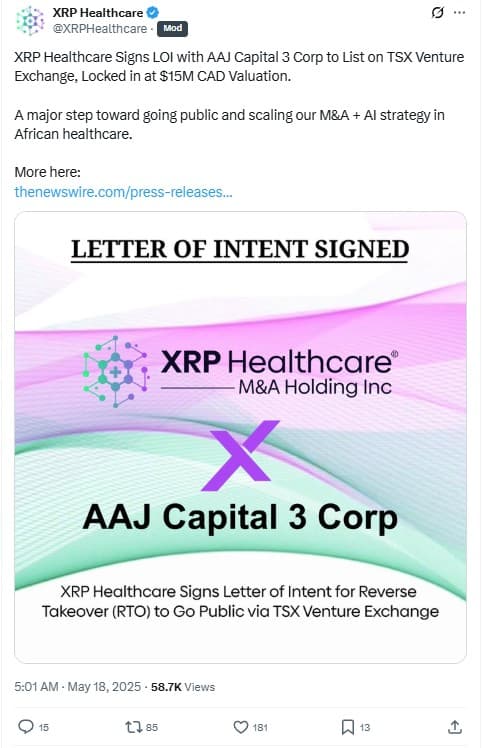
On May 14, XRP Healthcare signed a letter of intent with AAJ Capital 3 Corp for a reverse takeover that would list the company on Canada's TSX Venture Exchange.
"We want transparency, regulation, and the capital to grow responsibly," says Kain. "This isn't about a windfall. It's about proving the model in Uganda and, eventually, across Africa."
The proposed deal values the company at about 16 million Canadian dollars. It's not a giant crypto listing, but it is a meaningful milestone for a small XRP Ledger-based startup.
Football and modelling to XRP
Kain's route into crypto was unusual. Before founding XRP Healthcare, the Londoner had built a promising career in football and modelling, playing through the youth systems at QPR, Tottenham, and Arsenal before turning professional in Malta.

He also modelled for Nike, Adidas, and Puma and worked with major London agencies. But as that chapter cooled and finances tightened, he sold a prized Rolex and bought Bitcoin. That early conviction would become the beginning of a new career.
His investment grew dramatically and he reinvested in ICOs, eventually attracting tabloid attention. But for Kain and his father, the story was less about hype and more about immersion. They studied the space closely, followed projects such as Zilliqa and Ripple, and spent years understanding how digital assets could be used in a practical way.
Laban, meanwhile, had already spent decades building businesses from scratch. From exporting Lada cars to Jamaica to building Goldgenie into a recognizable luxury brand after a Dragons' Den investment, he brought experience in reinvention, sales, and operational discipline.
Teaming up with Laban to launch XRP Healthcare
The idea for XRP Healthcare came from Kain's desire to build something worthwhile using crypto. With support from his father, he started exploring sectors where blockchain could support useful, real-world infrastructure.
"Initially, the idea of launching a crypto project felt daunting. We'd seen the criticism and volatility other founders dealt with," says Kain. "But after detailed discussions with my father, it felt like the right path. Healthcare became the focus because it's essential, enormous, and a sector where you can genuinely affect lives."
The resulting business uses the XRP Ledger to facilitate cross-border payments, reduce administrative overhead, and track medical inventory. It combines a crypto-enabled digital healthcare platform with a mergers-and-acquisitions strategy aimed at consolidating pharmacies in Africa, beginning in Uganda.
XRP Healthcare's wallet supports XRPH, XRP, and RLUSD, and the team has also introduced a prescription savings card valid across 68,000 pharmacies in the United States. Kain says the longer-term plan is to integrate the wallet into the company's AI-focused healthcare app, XRPH AI.
"We realized the AI app could be monetized by giving users instant free health advice and pharmacy discounts," he says. "It made sense to separate crypto functions clearly from healthcare-focused AI features so both products could improve on their own terms."
Launch of the XRP Healthcare token goes off the rails
The launch of the XRP Healthcare token did not go entirely to plan. Third parties listed the token early on a decentralized exchange, briefly pushing it to an inflated valuation before the official sale had properly opened.
The company proceeded with its intended token sale at ten cents per token and raised roughly 380,000 US dollars to fund early operations. Since then, the market cap has moved significantly, peaking well above 20 million dollars before easing back.
That capital was used for real-world healthcare assets in Uganda, where a young population, improving digital infrastructure, and significant logistical gaps made the opportunity more practical than speculative.
Through a holding company, XRP Healthcare began acquiring licensed local pharmacies and integrating them into a unified, blockchain-supported platform. Expansion into neighboring countries such as Rwanda and Kenya is part of the post-listing plan.
"It's not enough to build from a laptop in London," says Kain. "You need to show up. You need to listen."

Starting small but building something real
While much of Web3 still chases trends, memecoins, and abstract promises, the Roomes family is trying to build something grounded in service delivery.
There is already precedent for digital financial infrastructure in African markets, from mobile money in Kenya to CBDC experimentation in Nigeria. But the founders are not trying to sell a grand futuristic narrative. Their framing is far more practical.
"We're not here to pitch dreams," says Laban. "We're here to deliver pills on shelves, at the right time, to the right people."
Laban brings decades of entrepreneurial experience, while Kain brings the instincts of a generation raised alongside digital products and crypto networks.
"We challenge each other," says Kain. "But that's the point. There's no ego. There's just a mission."

Jillian Godsil
Jillian Godsil is an award-winning journalist, broadcaster, and author. She changed electoral law in Ireland through a constitutional challenge in the Irish Supreme Court in 2014, is a former European Parliamentary candidate, and advocates for diversity, women in blockchain, and the homeless.