Introduction
Digital wallets have become an essential part of everyday life. Millions of people now use them to pay for goods, transfer money and manage digital assets. As healthcare becomes increasingly digital, wallets are expected to play a much broader role than simply storing funds. They are becoming gateways to connected healthcare ecosystems.
The XRPH Wallet has been developed with this broader vision in mind. Rather than functioning only as a cryptocurrency wallet, it is designed to become an entry point into the wider XRP Healthcare Infrastructure, supporting digital payments, QR code transactions, ecosystem participation and future healthcare services built on the XRP Ledger.
What Is the XRPH Wallet?
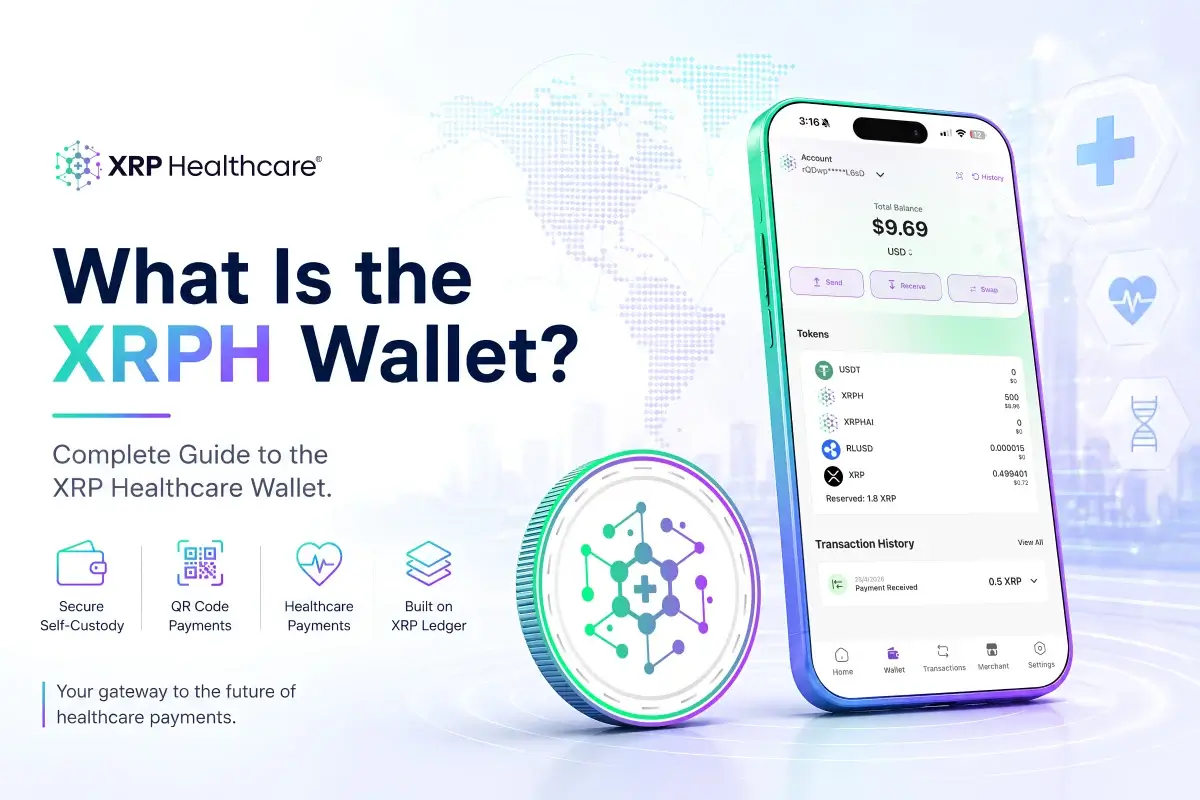
The XRPH Wallet is a blockchain wallet developed for the XRP Healthcare ecosystem. It enables users to securely manage supported digital assets while interacting with infrastructure built on the XRP Ledger (XRPL).
Unlike a traditional banking application, a blockchain wallet gives users direct access to their digital assets without relying on a central institution to hold them. This approach is known as non-custodial ownership.
The wallet is designed to balance usability with security, providing an interface that allows individuals to interact with blockchain technology without needing an advanced technical background.
More Than Just a Crypto Wallet
Many people associate blockchain wallets solely with buying and selling cryptocurrencies. Modern wallets, however, are evolving into digital platforms that provide access to entire ecosystems. The XRPH Wallet is intended to support far more than asset storage.
Its broader role includes providing access to infrastructure such as:
Digital healthcare payments
QR code payment functionality
Payment requests
Token management
Healthcare ecosystem participation
AI-powered reward programmes
Future healthcare payment services
This positions the wallet as an operational tool within the ecosystem rather than simply a place to store digital assets.
Why Non-Custodial Matters
One of the defining characteristics of the XRPH Wallet is that it is non-custodial. This means users remain in control of their own wallet and private keys. Unlike some financial platforms, no central organisation has day-to-day control over a user's digital assets.
For users, this provides several advantages:
With greater control also comes greater responsibility.
Users must securely protect their recovery phrase and private credentials, as these provide access to the wallet.
Built on the XRP Ledger
The XRPH Wallet operates within the XRP Ledger ecosystem. The XRP Ledger has become widely recognised for supporting efficient digital value transfer through an open-source blockchain network.
Its characteristics include:
Fast transaction confirmation
Low transaction costs
High scalability
Energy-efficient consensus
Mature developer ecosystem
These characteristics make it well suited to applications focused on payment infrastructure. By building on the XRP Ledger, the XRPH Wallet benefits from an established blockchain network while focusing on healthcare-specific functionality.
A Gateway to XRP Healthcare Infrastructure
The XRPH Wallet is not intended to operate in isolation. Instead, it serves as a gateway into the wider XRP Healthcare Infrastructure. Think of the infrastructure as a modern city. Roads, bridges, and utilities provide the foundation. The wallet is the front door that allows users to access that infrastructure.
Through a single interface, users can interact with multiple components of the ecosystem as new services become available. This approach reduces complexity while creating a more consistent user experience.
Designed for Simplicity
One of the barriers to blockchain adoption has traditionally been complexity. Technical terminology, unfamiliar interfaces, and complicated processes have discouraged many new users. The XRPH Wallet has been designed with accessibility in mind. Rather than expecting users to understand blockchain mechanics, the goal is to provide familiar payment experiences supported by blockchain technology behind the scenes. For many users, interacting with the wallet should feel no more difficult than using a modern mobile banking application.
Supporting Healthcare Payments
Healthcare payments often involve multiple organisations, currencies and payment systems. The XRPH Wallet is designed to simplify these interactions by providing a secure digital interface for compatible payment services.
Examples of potential payment scenarios include:
Paying healthcare providers
Pharmacy transactions
Digital invoices
QR code payments
Healthcare programme participation
Cross-border payment support
Future healthcare financial services
The wallet itself does not replace healthcare providers or financial institutions. Instead, it provides an interface that allows users to interact with payment infrastructure more efficiently.
A Foundation for Future Innovation
One of the strengths of blockchain infrastructure is its ability to evolve. The XRPH Wallet has been designed with future expansion in mind. As the XRP Healthcare ecosystem grows, additional functionality may be integrated without fundamentally changing how users access the platform.
Future services may include:
Expanded payment capabilities
Additional supported digital assets
Healthcare engagement tools
AI-powered services
Enhanced payment programmes
New ecosystem integrations
This modular approach allows innovation while maintaining a consistent user experience.
QR Code Payments Made Simple
One of the most practical features of the XRPH Wallet is its support for QR code payments. QR technology removes the need to manually enter long wallet addresses or payment details, making transactions quicker, more accurate and easier for both individuals and organisations. In practice, a healthcare provider can generate a QR code containing the payment information. The user simply scans the code with the XRPH Wallet, reviews the transaction details and confirms the payment.
Potential use cases include:
Medical conference registrations
Charitable healthcare donations
By simplifying the payment process, QR technology helps improve the overall user experience while reducing the likelihood of manual errors.
Supporting the XRP Healthcare Ecosystem
The XRPH Wallet has been designed to connect users with the broader XRP Healthcare ecosystem. As new services are introduced, the wallet is intended to become the central point through which users interact with infrastructure and ecosystem utilities.
These may include:
Rather than downloading multiple applications for different services, users can access an expanding ecosystem through a single wallet interface.
Understanding Supported Tokens
The XRPH Wallet is designed to support assets that play different roles within the ecosystem.
XRPH Token
The XRPH Token supports the infrastructure side of the ecosystem.
Its utility is centred around participation in the blockchain-powered payment environment and related ecosystem services.
XRPHAI Token
The XRPHAI Token is focused on user engagement and AI-driven rewards within the XRP Healthcare ecosystem. Users may earn XRPHAI through eligible activities within supported applications and programmes. The two tokens serve complementary purposes while operating within the wider ecosystem.
XRP
As the native digital asset of the XRP Ledger, XRP enables transactions on the network and supports movement of value across compatible services.
RLUSD and Other Supported Assets
As the XRP Ledger ecosystem evolves, compatible assets such as RLUSD may support additional payment scenarios where appropriate.
Support for any specific digital asset depends on wallet functionality and future ecosystem development.
Security Best Practices
A blockchain wallet gives users direct ownership of their digital assets.
With that ownership comes responsibility.
To help protect their wallet, users should always:
Store their recovery phrase securely and offline.
Never share private keys or recovery phrases with anyone.
Enable device security features such as biometrics or strong passcodes.
Download wallet software only from official sources.
Be cautious of phishing websites and fraudulent messages.
Verify payment details before confirming transactions.
Unlike traditional banking systems, blockchain transactions are generally irreversible once confirmed.
Taking a few simple precautions can significantly improve security.
Why Self-Custody Is Important
Self-custody is one of the defining principles of blockchain technology.
Instead of relying on a third party to hold digital assets, users maintain direct control of their own wallet.
This approach provides several potential benefits:
For many users, self-custody represents an important shift towards greater personal control over digital assets.
How the Wallet Fits Within XRP Healthcare Infrastructure
The XRPH Wallet is one component of a much larger infrastructure. Each part of the ecosystem performs a different role. Component Primary Purpose Infrastructure Supports blockchain-powered healthcare payment networks XRPH Wallet User access to the ecosystem XRPH Token Infrastructure and ecosystem utility XRPHAI Token AI engagement and reward utility Payment Rails Movement of digital value QR Payments Simplified payment experience XRP Ledger Blockchain settlement layer
Together, these components create a connected ecosystem designed to support digital healthcare payments and future innovation.
Looking Ahead
Digital healthcare continues to evolve. Patients increasingly expect fast, secure and convenient digital experiences. Healthcare providers require infrastructure capable of supporting international operations, digital engagement and modern payment systems.
The XRPH Wallet is designed to evolve alongside these changing requirements. Future enhancements may include additional payment functionality, broader ecosystem integration and new services that further connect blockchain technology with healthcare.
As the XRP Healthcare ecosystem expands, the wallet is intended to remain the primary gateway through which users access its growing range of capabilities.
Conclusion
The XRPH Wallet is more than a digital wallet. It is designed to be the secure gateway into the XRP Healthcare ecosystem, connecting users with blockchain-powered payment infrastructure, QR payments, digital asset management and future healthcare services. Built on the XRP Ledger and designed around self-custody, the wallet combines modern blockchain technology with a user-friendly experience suitable for both newcomers and experienced digital asset users.
As healthcare continues its digital transformation, wallets such as the XRPH Wallet are expected to play an increasingly important role in connecting users, providers and payment infrastructure through secure and efficient technology.
Continue Learning
Continue exploring the XRP Healthcare Infrastructure knowledge base: