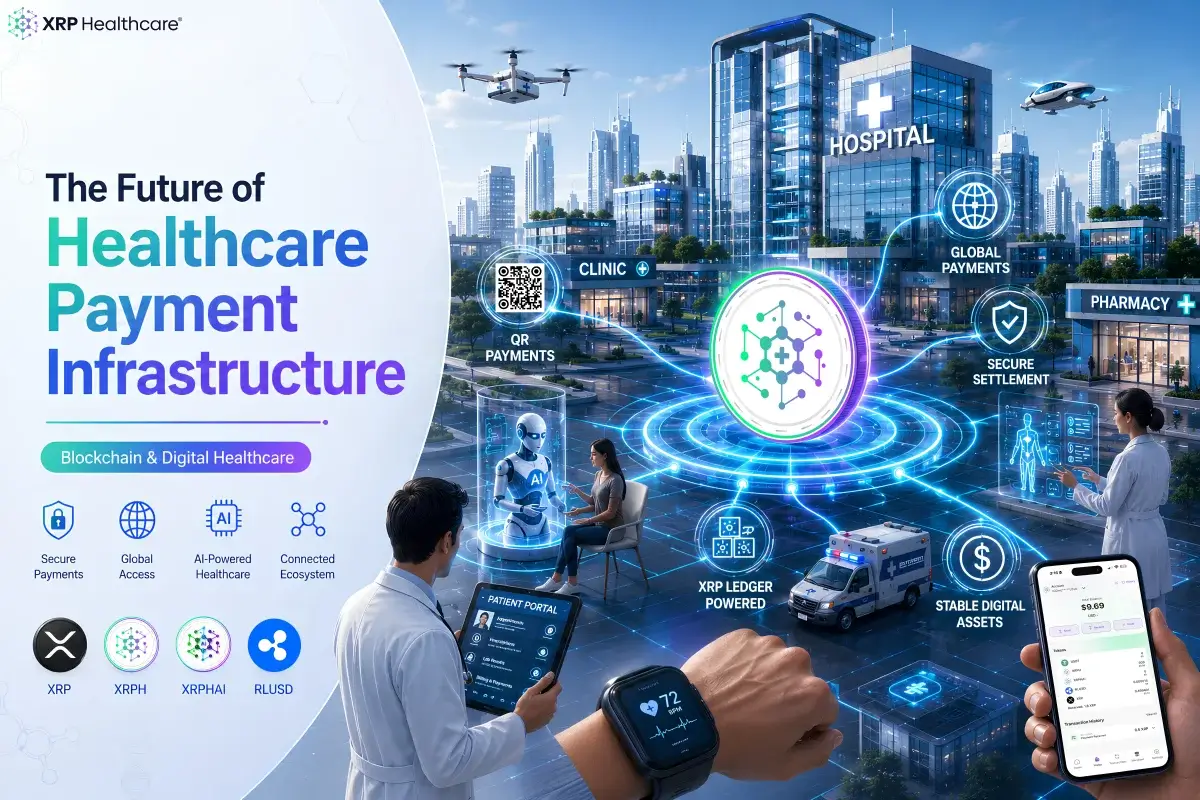
Healthcare is undergoing one of the most significant digital transformations in its history. Patients increasingly expect healthcare services that are available wherever they are. Healthcare professionals use digital platforms to communicate with patients. Artificial intelligence is assisting with healthcare information and administrative workflows. Mobile technology continues to reshape how healthcare services are accessed. As healthcare changes, payment infrastructure must evolve as well.
Traditional financial systems remain important, but many were developed before today's connected healthcare environment. Modern healthcare increasingly requires payment infrastructure capable of supporting digital services, international collaboration and mobile-first experiences.
Blockchain technology represents one approach to building that future. Within the XRP Healthcare Infrastructure, technologies such as the XRP Ledger, Healthcare Payment Rails, the XRPH Wallet, QR Payments and supported digital assets work together to create a flexible payment ecosystem designed for the next generation of digital healthcare.
Why Healthcare Infrastructure Matters
When people think about healthcare, they often focus on doctors, hospitals and treatments.
However, infrastructure quietly supports everything that happens behind the scenes.
Healthcare infrastructure includes:
Payment systems
Communication networks
Appointment systems
Digital identity
Medical records
Financial settlement
Technology platforms
Without reliable infrastructure, even excellent healthcare services become more difficult to deliver efficiently. Modern healthcare therefore requires infrastructure that is secure, scalable and capable of adapting to future innovation.
The Shift Towards Digital Healthcare
Healthcare is becoming increasingly digital across almost every area of patient care.
Telemedicine
Patients can access consultations without travelling to a clinic.
Mobile Healthcare
Healthcare services increasingly operate through smartphones and digital applications.
AI-Assisted Healthcare
Artificial intelligence is helping users access healthcare information, navigate services and support administrative processes.
Connected Devices
Wearable technology and connected health devices continue to generate valuable health information.
Digital Payments
Patients increasingly expect payment experiences that are as convenient as those found in banking, retail and travel.
Each of these developments increases the need for modern payment infrastructure.
The Evolution of Healthcare Payments
Healthcare payments have changed significantly over time.
Cash - Healthcare transactions were originally completed using physical currency.
Cards and Bank Transfers - Electronic payments improved convenience while introducing new payment networks.
Online Payments - Digital healthcare services enabled payments over the internet.
Mobile Payments - Smartphones introduced faster and more convenient payment experiences.
Blockchain Infrastructure - Modern blockchain networks provide another layer of payment infrastructure capable of supporting transparent digital settlement.
The future will likely involve several payment technologies working together rather than a single solution replacing everything else.
Building Connected Healthcare Ecosystems
Healthcare is moving away from isolated systems towards connected ecosystems.
Future healthcare environments may connect:
Patients
Hospitals
Clinics
Pharmacies
Laboratories
Insurance providers
AI healthcare assistants
Mobile applications
Digital wallets
Payment infrastructure acts as one of the essential layers that enables these participants to exchange value efficiently.
The Role of Blockchain
Blockchain is sometimes misunderstood as simply another payment method. In reality, it functions as infrastructure. Just as roads transport vehicles and the internet transports information, blockchain infrastructure helps move digital value.
Within healthcare, blockchain payment infrastructure may support:
Digital settlement
QR payments
Cross-border healthcare payments
Stable digital assets
Wallet connectivity
Transparent transaction records
Ecosystem participation
The blockchain itself often remains invisible to the end user while supporting these services behind the scenes.
Why the XRP Ledger Fits Healthcare Infrastructure
The XRP Ledger was designed for efficient digital value transfer. Several characteristics make it suitable for payment-focused infrastructure.
These include:
Fast transaction confirmation
Low transaction costs
High throughput
Energy-efficient consensus
Mature blockchain ecosystem
Open-source architecture
These features support applications requiring reliable payment infrastructure without introducing unnecessary complexity for users.
The XRPH Wallet as the User Gateway
Infrastructure is only useful if people can access it easily. The XRPH Wallet provides the interface between users and the blockchain infrastructure.
Potential capabilities include:
Sending supported digital assets
Receiving payments
Scanning QR codes
Viewing transaction history
Managing multiple ecosystem assets
Accessing future healthcare services
The wallet simplifies user interaction while the blockchain infrastructure manages settlement behind the scenes.
A Multi-Layer Healthcare Infrastructure
The XRP Healthcare ecosystem consists of several interconnected layers working together.
Settlement Layer
XRP Ledger
Payment Infrastructure
Healthcare Payment Rails
Healthcare Settlement
User Layer
XRPH Wallet
QR Code Payments
Digital Assets
XRP
XRPH
XRPHAI
RLUSD
Engagement Layer
XRP Payment Programme
AI-powered ecosystem participation
Each layer performs a specific function while contributing to a broader healthcare payment ecosystem.
Preparing for Tomorrow's Healthcare
Healthcare continues to evolve at an extraordinary pace. Future payment infrastructure must be flexible enough to support innovations that may not yet exist. Rather than building isolated payment systems, organisations increasingly require infrastructure capable of adapting as healthcare technology advances.
Blockchain infrastructure provides one foundation upon which future healthcare payment services can continue to develop.
Artificial Intelligence and Healthcare Payments
Artificial intelligence is expected to play an increasingly important role in digital healthcare. While AI does not replace healthcare professionals, it can assist with administrative processes, user guidance and navigation through healthcare services. Future healthcare payment infrastructure may support AI-assisted experiences such as:
Guiding users to appropriate healthcare services
Helping patients understand available payment options
Supporting appointment scheduling
Assisting with healthcare navigation
Automating administrative workflows
Improving digital user experiences
When combined with modern payment infrastructure, AI has the potential to reduce administrative complexity while making healthcare services more accessible.
Digital Identity and Trust
As healthcare services become more digital, securely identifying users becomes increasingly important. Digital identity solutions may help streamline access to healthcare services while reducing administrative friction.
Examples of future applications include:
Secure patient authentication
Provider verification
Digital consent management
Appointment confirmation
Healthcare membership services
Cross-border healthcare access
Payment infrastructure and digital identity are separate technologies, but they can work together to improve the overall healthcare experience.
Interoperability Will Shape the Future
Healthcare providers use a wide variety of systems. Hospitals, pharmacies, insurers, laboratories, and clinics often rely on different software platforms. Future payment infrastructure should be able to work alongside these systems rather than require them to be replaced.
Interoperability allows:
Healthcare applications to exchange information where appropriate
Payment infrastructure to support existing workflows
Organisations to adopt new technologies gradually
Innovation without disrupting clinical operations
This layered approach enables healthcare organisations to modernise while continuing to use trusted systems already in place.
The Role of Stable Digital Assets
Different payment scenarios require different financial tools. Within the XRP Healthcare ecosystem, multiple digital assets can support different functions.
Examples include:
XRP for value transfer on the XRP Ledger.
XRPH for ecosystem utility.
XRPHAI for AI-powered engagement.
RLUSD as a US dollar-denominated stablecoin designed to support more predictable digital payment values.
Rather than competing with one another, these assets are intended to complement different aspects of the ecosystem.
Security Will Remain a Priority
As digital healthcare expands, security will remain fundamental. Modern payment infrastructure should combine secure technology with responsible operational practices.
Important considerations include:
Secure wallet authentication
Responsible private key management
Cryptographic transaction verification
User education
Secure application development
Compliance with applicable regulations
Continuous security monitoring
Technology alone cannot guarantee security.
Strong governance, operational controls and informed users remain essential components of any healthcare payment ecosystem.
A Connected Healthcare Ecosystem
The future of healthcare is likely to become increasingly interconnected. Patients may interact with multiple services through a single digital ecosystem.
Potential components include:
Hospitals
Clinics
Pharmacies
AI healthcare assistants
Remote consultation platforms
Wearable health devices
Diagnostic services
Healthcare payment systems
Wellness programmes
Payment infrastructure acts as one of the core layers connecting these services together.
The XRP Healthcare Infrastructure Vision
Layer Purpose XRP Ledger Blockchain settlement layer Healthcare Payment Rails Movement of digital value Healthcare Settlement Finalisation of transactions XRPH Wallet User access to the ecosystem QR Code Payments Simple payment initiation XRP Native digital asset of the XRP Ledger XRPH Ecosystem utility XRPHAI AI-powered engagement RLUSD Stable digital payment option XRP Payment Programme Participation and ecosystem engagement
Each component performs a specialised role while contributing to a broader payment infrastructure designed for modern healthcare.
Building for Long-Term Innovation
Healthcare technology will continue evolving over the coming years.
Rather than building infrastructure for today's requirements alone, organisations increasingly need systems capable of adapting to future innovation.
Potential developments include:
More personalised healthcare experiences
Expanded AI capabilities
Greater international healthcare collaboration
Increased use of digital wallets
Connected healthcare ecosystems
Smart payment automation
New digital financial services
Flexible payment infrastructure provides a foundation capable of supporting these future developments.
Blockchain Supports Healthcare-It Does Not Replace It
Blockchain technology should be viewed as infrastructure rather than healthcare itself.
Within the XRP Healthcare ecosystem:
The XRP Ledger supports settlement.
Healthcare Payment Rails move digital value.
The XRPH Wallet provides user access.
Healthcare organisations continue delivering medical services.
Healthcare professionals continue providing clinical expertise.
This distinction is important. Technology supports healthcare. It does not replace the people who deliver it.
Looking Ahead
Healthcare payment infrastructure is expected to become more intelligent, connected and globally accessible. Patients will increasingly expect digital experiences that are secure, efficient and easy to use.
Healthcare providers will require payment systems capable of supporting international operations, mobile services and future innovation. Blockchain infrastructure, digital wallets and interoperable payment technologies offer one approach to helping meet these evolving expectations while complementing existing healthcare systems.
Conclusion
The future of healthcare payment infrastructure is about building systems that are flexible, connected and ready to support the next generation of digital healthcare. Within the XRP Healthcare ecosystem, technologies such as the XRP Ledger, Healthcare Payment Rails, the XRPH Wallet, QR Code Payments, XRPH, XRPHAI and RLUSD work together as part of a layered infrastructure designed to support secure and efficient digital payments.
Rather than replacing traditional healthcare systems, this infrastructure is intended to complement them, providing a modern foundation capable of evolving alongside healthcare itself.
Continue Learning
Explore more topics within the XRP Healthcare Infrastructure knowledge hub:
Call to Action
Ready to explore the technologies shaping the future of healthcare payments?
Visit the XRP Healthcare Infrastructure pillar page to discover how the XRP Ledger, XRPH Wallet, Healthcare Payment Rails, QR payments and digital assets combine to create a modern blockchain-powered healthcare payment ecosystem.