Introduction
Modern digital platforms increasingly reward users for participating in their ecosystems. Airlines use frequent-flyer programmes, retailers provide loyalty points, financial platforms offer cashback, and digital subscription services provide membership benefits.
Healthcare is beginning to explore similar approaches. Rather than rewarding spending alone, digital healthcare ecosystems can use participation programmes to encourage users to engage more consistently with healthcare services, educational resources, wellness initiatives, and digital platforms.
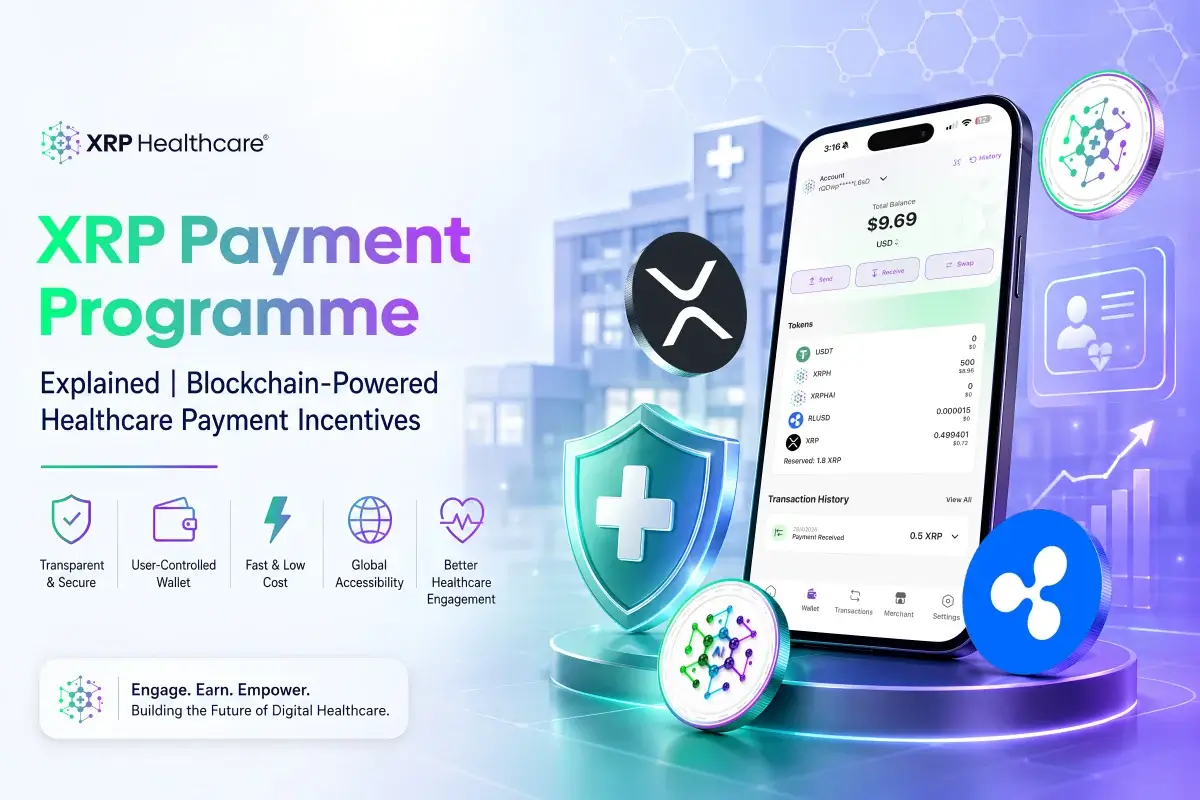
Blockchain technology introduces new ways of managing these programmes through transparent and verifiable digital infrastructure. Within the XRP Healthcare Infrastructure, the XRP Payment Programme forms part of a broader ecosystem designed to support digital engagement while operating alongside the XRPH Wallet, Healthcare Payment Rails, and the XRP Ledger.
What Is a Payment Programme?
A payment programme is a structured system that provides incentives when users complete specific activities or interact with supported services. These incentives can encourage participation, engagement, or continued use of a digital platform.
Examples of payment and reward programmes across other industries include:
Airline reward schemes
Retail loyalty programmes
Cashback offers
Hotel membership programmes
Digital subscription benefits
Healthcare ecosystems can apply similar concepts to encourage meaningful interaction with digital health services.
The purpose is not simply to reward transactions. Instead, a healthcare payment programme can be designed to encourage users to make greater use of appropriate digital healthcare resources.
Why Healthcare Payment Incentives Matter
Building healthy habits often requires consistency. Digital engagement programmes can encourage users to return regularly and make better use of healthcare resources available through supported platforms.
Potential activities recognised within digital healthcare ecosystems may include:
Completing health assessments
Engaging with health education content
Using supported healthcare services
Participating in wellness initiatives
Returning to digital healthcare platforms
Exploring available healthcare resources
Such programmes should complement professional medical care rather than replace it. Healthcare decisions should continue to be based on appropriate professional guidance.
Traditional Reward Programmes
Many traditional reward programmes operate through centralised databases controlled by individual organisations.
These systems commonly depend on:
Traditional systems have proven effective across many industries. However, blockchain infrastructure introduces additional possibilities for managing digital assets and participation across interconnected ecosystems.
Blockchain and Digital Healthcare Incentives
Blockchain technology enables digital assets to be transferred through transparent and verifiable infrastructure.
Instead of maintaining reward balances exclusively within private databases, blockchain-based systems can allow supported digital assets to be managed through compatible wallets and blockchain settlement networks.
Potential characteristics of blockchain-powered healthcare payment programmes include:
Transparent distribution
User-controlled digital wallets
Efficient settlement
Global accessibility
Interoperable digital assets
Verifiable transaction histories
The blockchain provides the underlying infrastructure, while programme rules, eligibility requirements, and participation conditions remain the responsibility of the organisations operating the ecosystem.
The XRP Ledger's Role in Healthcare Payments
Within the XRP Healthcare ecosystem, the XRP Ledger provides the blockchain settlement layer for compatible digital payment applications and programmes.
The XRP Ledger offers characteristics that can be useful for payment-focused applications, including:
Fast transaction confirmation
Low transaction costs
High throughput
Energy-efficient consensus
Established payment infrastructure
These characteristics make blockchain infrastructure suitable for supporting digital payment and participation applications.
The XRP Ledger does not determine how a particular payment programme operates. Instead, it provides the underlying network through which supported transactions can be processed.
The Role of the XRPH Wallet
Users need a convenient way to interact with digital payment programmes. The XRPH Wallet provides a user-facing interface for compatible digital assets and services within the ecosystem.
Potential wallet functions may include:
Receiving supported digital assets
Managing ecosystem tokens
Viewing transaction history
Sending payments
Receiving payments
Scanning QR payment requests
Accessing supported healthcare services
The wallet acts as the user interface, while blockchain infrastructure handles the underlying transaction and settlement processes.
How the XRP Payment Programme Fits Into the XRP Healthcare Ecosystem
The XRP Healthcare ecosystem can be viewed as a collection of interconnected infrastructure layers, with each component serving a specific purpose.
Settlement Layer
The XRP Ledger provides the underlying blockchain settlement infrastructure.
Payment Infrastructure
Healthcare Payment Rails and healthcare settlement systems support the movement and processing of digital value.
User Layer
The XRPH Wallet and QR payment functionality provide users with accessible interfaces for interacting with supported services.
Digital Assets
The ecosystem can involve multiple digital assets, including:
Participation Layer
The XRP Payment Programme and AI-powered engagement initiatives can support participation and interaction with compatible ecosystem services.
Together, these components form a connected healthcare payment infrastructure designed to support modern digital healthcare experiences.
Benefits of Digital Healthcare Participation
Well-designed digital participation programmes can provide several potential benefits.
Increased Healthcare Engagement
Digital incentives may encourage users to explore healthcare resources and return to supported platforms more consistently.
Improved User Experience
Participation incentives can make digital healthcare applications more engaging and easier for users to interact with.
Ecosystem Growth
Engagement programmes can help build active digital communities around healthcare platforms and services.
Transparent Distribution
Where blockchain transactions are used, supported digital asset transfers can be recorded on a verifiable ledger.
Global Accessibility
Blockchain-based programmes can potentially support users across different geographic regions, subject to applicable regulations, platform availability, and local requirements.
Supporting Responsible Healthcare Engagement
Any healthcare payment programme should be designed to complement-not replace-professional medical advice and clinical care.
The purpose of a digital healthcare participation programme is to encourage users to engage with appropriate healthcare services, educational resources, wellness initiatives, and supported platform features.
It should not encourage users to make inappropriate healthcare decisions simply to receive an incentive.
Healthcare decisions should always be made in consultation with qualified healthcare professionals where appropriate.
Integrating With AI-Powered Healthcare
As healthcare becomes increasingly digital, payment programmes can work alongside AI-powered services to create more engaging user experiences.
Within the XRP Healthcare ecosystem, AI tools may help users navigate healthcare information, discover relevant services, and access educational resources.
A blockchain-based payment programme can complement these experiences by supporting participation across compatible ecosystem features.
Examples may include engagement with:
Health education resources
AI-powered health guidance
Wellness initiatives
Digital healthcare journeys
Community health campaigns
Future ecosystem services
The payment programme is intended to support platform engagement rather than influence clinical decision-making.
How XRP, XRPH, XRPHAI and RLUSD Work Together
The XRP Healthcare ecosystem is designed around multiple digital assets, with each potentially serving a different purpose.
Rather than necessarily competing with one another, these assets can support different aspects of the broader ecosystem.
Digital AssetExample RoleXRPNative digital asset supporting value transfer on the XRP LedgerXRPHUtility within the XRP Healthcare Infrastructure ecosystemXRPHAIAI engagement and ecosystem participationRLUSDStable digital payment option linked to the US dollar
The XRP Payment Programme forms part of this wider infrastructure and can support participation involving compatible digital assets and services.
Transparency Through Blockchain
One potential advantage of blockchain-powered participation programmes is transaction transparency.
When supported digital assets are transferred, blockchain infrastructure can provide a verifiable transaction history. This can help support:
Transparent asset distribution
Auditable transaction records
User-controlled wallets
Efficient settlement
Reduced dependence on closed internal databases
The blockchain records supported transaction activity, while the rules governing the programme remain the responsibility of the organisations operating the ecosystem.
Security and Responsible Participation
Healthcare ecosystems require strong standards for security and responsible technology use.
Digital participation programmes should therefore operate alongside appropriate operational practices, including:
Secure wallet authentication
Responsible private-key management
User verification where appropriate
Secure application development
Compliance with applicable regulations
Ongoing user education
Users should protect their wallet credentials and carefully verify transaction details before confirming any blockchain transaction.
Encouraging Long-Term Engagement
Digital participation programmes are generally more useful when they encourage meaningful engagement over time rather than one-off activity.
Within healthcare ecosystems, this could include encouraging users to:
Return to digital healthcare platforms regularly
Explore educational resources
Discover available healthcare services
Participate in wellness initiatives
Engage with future ecosystem features
The broader objective is to build an active and informed user community while supporting responsible use of digital healthcare technologies.
Supporting a Connected Healthcare Ecosystem
The XRP Payment Programme is only one component of a broader healthcare infrastructure.
The ecosystem can be understood through several interconnected layers.
Settlement Layer
Payment Infrastructure
Healthcare Payment Rails
Healthcare Settlement
User Layer
XRPH Wallet
QR Code Payments
Digital Assets
Participation Layer
Each layer performs a different function while contributing to a connected digital healthcare environment.
Looking Towards the Future
Healthcare platforms are expected to become increasingly intelligent, personalised, and connected.
Future developments may include:
AI-assisted healthcare journeys
Personalised wellness programmes
Preventive healthcare initiatives
Connected wearable devices
Remote patient monitoring
International healthcare communities
Digital identity integration
Smart payment automation
As these technologies develop, participation programmes may provide another mechanism for encouraging users to interact with supported healthcare services and digital resources.
Blockchain Supports the Infrastructure
It is important to distinguish between healthcare delivery and digital participation.
The XRP Payment Programme is designed to support engagement within the digital ecosystem. It does not replace healthcare professionals or provide clinical advice.
Different components of the infrastructure perform different roles:
The XRP Ledger provides blockchain settlement infrastructure.
The XRPH Wallet provides user access to supported digital assets and services.
Healthcare Payment Rails support the movement of digital value.
Healthcare providers continue to deliver clinical care.
This separation of responsibilities helps establish a clearer understanding of how blockchain technology can support healthcare without replacing the professionals responsible for delivering medical services.
Conclusion
The XRP Payment Programme represents one component of a broader blockchain-powered healthcare ecosystem.
By supporting participation through digital payment infrastructure, it can complement healthcare payment services built around the XRP Ledger, XRPH Wallet, and Healthcare Payment Rails.
Rather than functioning solely as a traditional loyalty scheme, a blockchain-powered participation programme can form part of a connected infrastructure designed to encourage meaningful engagement with compatible digital healthcare services.
As healthcare continues its digital transformation, payment programmes and digital incentives may become increasingly relevant to the way users interact with healthcare platforms, educational resources, wellness initiatives, and other digital services.
Continue Learning
Explore more topics within the XRP Healthcare Infrastructure knowledge hub:
Call to Action
Discover how blockchain payment infrastructure can support the future of digital healthcare.
Explore the XRP Healthcare Infrastructure pillar page to learn how the XRP Payment Programme, XRPH Wallet, Healthcare Payment Rails, and XRP Ledger fit together within a connected healthcare ecosystem.
Explore XRP Healthcare Infrastructure