Open Infrastructure for XRP-Based Healthcare Payments
XRP Healthcare operates as an independent infrastructure provider through XRP Healthcare LLC, the registered trademark owner.
The XRPH Wallet and XRP Payment Program framework form part of the XRP Healthcare infrastructure architecture for healthcare payment deployment using the XRP Ledger (XRPL). The model emphasizes non-custodial design, interoperability, technical transparency, and regulatory clarity.
This infrastructure is open, modular, and structured for integration by pharmacies, healthcare networks, payment facilitators, and enterprise system providers seeking to deploy XRP-based payment rails within their own environments.
XRPH Wallet does not provide custody, brokerage, exchange, financial, or healthcare services. It is non-custodial software infrastructure.
Token Utility Explained: Understanding the Role of Digital Assets in the XRP Healthcare Ecosystem
Learn what token utility means, why utility tokens exist, and how XRP, XRPH, XRPHAI and RLUSD support different functions within the XRP Healthcare ecosystem.
Token Utility Explained | Understanding Digital Assets in Healthcare | XRP Healthcare®
Introduction
One of the most common misunderstandings about blockchain technology is the belief that every digital asset exists solely to transfer value. In reality, many blockchain ecosystems use multiple digital assets, each designed to perform a specific function. Some assets are primarily used for payments.
Others help users access platform features. Some support ecosystem participation. Others provide greater payment stability. This concept is known as token utility.
Within the XRP Healthcare Infrastructure, different digital assets work together to support payment infrastructure, AI-powered engagement, and ecosystem participation. Understanding why these assets exist-and the role each one performs-helps explain how the wider healthcare ecosystem has been designed.
The video above provides a brief overview of the XRPH Wallet and demonstrates how users can interact with multiple supported ecosystem assets through a single interface, making it easier to understand the concept of token utility in practice.
What Is Token Utility?
Token utility refers to the practical purpose a digital asset serves within a blockchain ecosystem. Rather than existing purely as a speculative asset, a utility token is designed to perform one or more defined functions.
Examples of token utility may include:
Accessing platform features
Supporting ecosystem participation
Facilitating digital payments
Enabling governance mechanisms
Unlocking compatible services
Supporting application functionality
The exact utility depends on the design of each blockchain ecosystem.
Why Utility Matters
Well-designed blockchain ecosystems assign different responsibilities to different assets. This allows each asset to focus on a specific role.
Clear Functionality
Users understand why each asset exists.
Ecosystem Flexibility
Different assets can support different platform services.
Better User Experience
Users can select the asset most appropriate for a particular activity.
Scalable Platform Design
Specialised assets allow ecosystems to expand without requiring one token to perform every function.
Understanding the XRP Healthcare Ecosystem
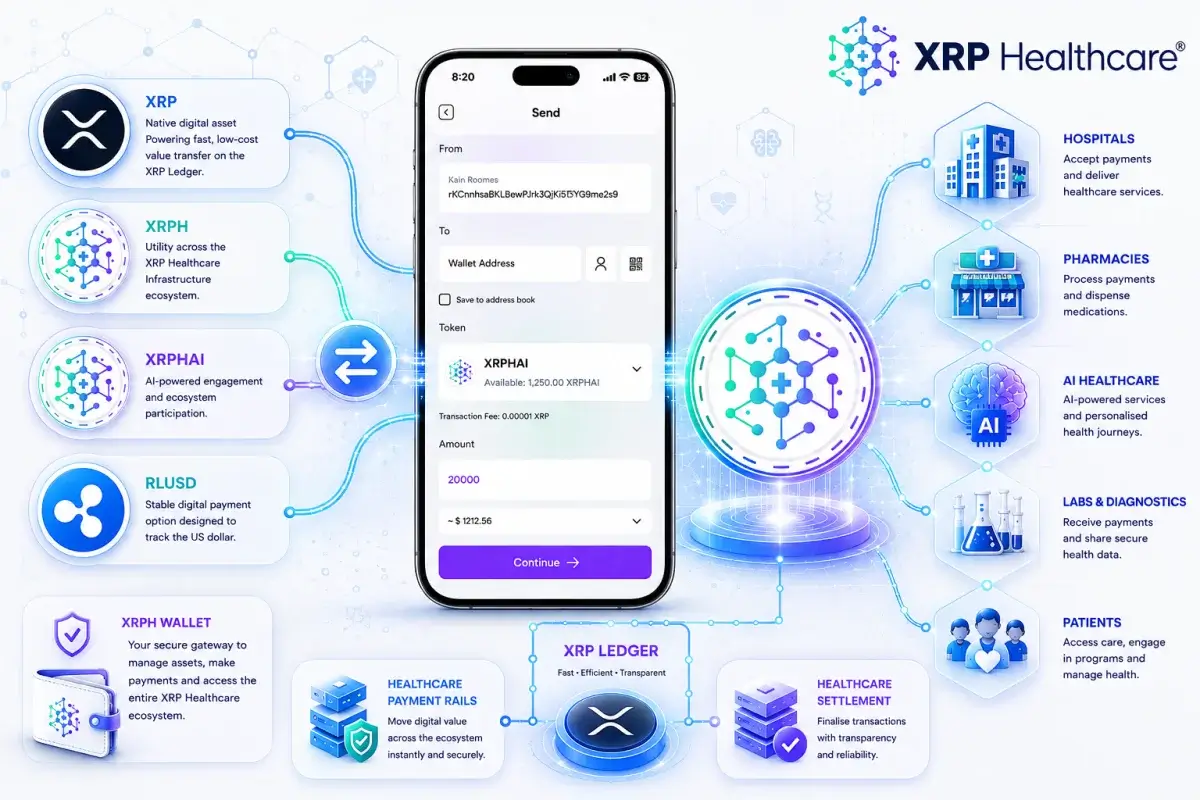
The XRP Healthcare Infrastructure includes several digital assets working together. Each serves a different purpose. Digital Asset Example Function: XRP Native digital asset supporting value transfer on the XRP Ledger. XRPH Utility throughout the XRP Healthcare Infrastructure ecosystem. XRPHAI: AI-powered engagement and ecosystem participation. RLUSD: Stable digital payment option designed to track the US dollar.
Rather than competing with one another, these assets complement different aspects of the ecosystem.
XRP: The Settlement Foundation
XRP is the native digital asset of the XRP Ledger. Its primary role is supporting efficient movement of value across the blockchain network. Within the healthcare ecosystem, XRP contributes to the underlying payment infrastructure that enables blockchain-based transactions.
XRPH: Ecosystem Utility
XRPH supports utility across the XRP Healthcare Infrastructure. As the ecosystem evolves, supported functionality may include interaction with compatible platform services and infrastructure features. Utility develops according to ecosystem design and future platform development.
XRPHAI: AI-Powered Participation
XRPHAI supports AI-powered engagement within the ecosystem. Rather than acting solely as a payment asset, XRPHAI is intended to facilitate participation in compatible digital experiences and future AI-related platform functionality.
RLUSD: Stable Digital Payments
RLUSD provides a stable digital payment option designed to maintain a value aligned with the US dollar. Where payment consistency is important, stable digital assets may complement other blockchain payment options. This allows users to choose the asset that best fits a particular payment scenario.
Token Utility Beyond Payments
Utility extends beyond simply transferring value.
Within blockchain ecosystems, utility may also include:
Platform participation
Access to digital services
AI-powered experiences
Community engagement
Digital identity
Future ecosystem functionality
As blockchain platforms evolve, utility often expands alongside the ecosystem itself.
The Role of the XRPH Wallet
The XRPH Wallet provides users with access to supported digital assets. Potential capabilities include:
Holding multiple ecosystem assets
Sending payments
Receiving payments
Swapping supported assets
Viewing transaction history
Managing ecosystem participation
Accessing future healthcare services
The wallet simplifies interaction while the blockchain infrastructure manages settlement.
Blockchain Provides the Infrastructure
Behind every ecosystem asset is blockchain infrastructure. Within the XRP Healthcare ecosystem:
The XRP Ledger provides settlement.
Healthcare Payment Rails support value transfer.
The XRPH Wallet provides user access.
Digital assets provide specialised ecosystem functionality.
Together these layers create a flexible healthcare payment ecosystem capable of supporting future innovation.
Utility Supports Long-Term Growth
The value of utility lies in enabling an ecosystem to evolve. Rather than assigning every responsibility to a single asset, blockchain ecosystems can introduce specialised functionality while maintaining a consistent infrastructure.
This modular approach supports scalability, innovation, and future platform development.
Token Utility Explained
How Token Utility Creates a Stronger Ecosystem
One of the strengths of modern blockchain platforms is that they do not rely on a single digital asset to perform every task. Instead, different assets are designed with different objectives. This creates a more flexible ecosystem where each component supports a specific function.
Within the XRP Healthcare ecosystem, this layered approach helps separate:
Payment settlement
Ecosystem utility
AI-powered participation
Stable digital payments
User interaction
Each element contributes to the overall infrastructure while remaining focused on its intended purpose.
Practical Examples of Token Utility
Understanding token utility becomes easier when viewed through real-world examples. Within a healthcare ecosystem, different digital assets may support activities such as:
Participating in compatible AI-powered services.
Accessing future ecosystem features.
Supporting digital healthcare engagement.
Completing blockchain-based payments.
Receiving eligible ecosystem incentives.
Interacting with compatible wallet functionality.
These examples illustrate how utility extends well beyond simply transferring value.
The Importance of Specialisation
Imagine if every part of a hospital performed the same function. Doctors, nurses, laboratories and pharmacies all have different responsibilities. The same principle applies to blockchain ecosystems.
Specialisation allows:
Better platform design.
Greater flexibility.
Easier future expansion.
Improved user experiences.
More efficient ecosystem development.
Rather than competing with one another, specialised digital assets work together.
How the XRPH Wallet Connects Everything
The XRPH Wallet serves as the user's gateway into the ecosystem. Instead of managing separate applications for different digital assets, users can interact with supported assets through one wallet interface.
Potential capabilities include:
Managing multiple supported assets.
Viewing balances.
Sending payments.
Receiving payments.
Swapping compatible assets.
Viewing transaction history.
Accessing future healthcare services.
The wallet simplifies participation while the blockchain infrastructure performs the underlying settlement.
Token Utility and Healthcare Innovation
Healthcare continues to evolve through digital technology. As new services emerge, blockchain ecosystems may introduce additional forms of utility.
Potential future examples include:
AI-assisted healthcare experiences.
Digital healthcare identity.
Personalised wellness programmes.
Connected wearable devices.
International healthcare participation.
Smart payment automation.
Community healthcare initiatives.
Utility evolves alongside the ecosystem rather than remaining fixed.
Governance and Responsible Development
Utility should always be clearly defined. Users benefit when ecosystem documentation explains:
The purpose of each digital asset.
Supported platform functionality.
Participation requirements.
Future development objectives.
Applicable governance processes.
Clear communication helps users better understand how each component contributes to the ecosystem.
Security Remains Fundamental
Regardless of a token's purpose, users should always follow good wallet security practices.
These include:
Protecting recovery phrases.
Never sharing private credentials.
Reviewing transactions carefully.
Keeping wallet software updated.
Using trusted devices.
Remaining alert to phishing attempts.
The XRPH Wallet provides non-custodial access, meaning users remain responsible for protecting their wallet credentials.
How Token Utility Fits Into the XRP Healthcare Infrastructure
The XRP Healthcare ecosystem consists of several complementary layers.
Layer Purpose XRP Ledger Blockchain settlement infrastructure Healthcare Payment Rails Digital value movement Healthcare Settlement Transaction finalisation XRPH Wallet User access QR Code Payments Payment initiation XRP Native blockchain asset XRPH Ecosystem utility XRPHAI AI-powered engagement RLUSD Stable digital payment option
Each technology contributes to an integrated healthcare payment ecosystem.
Looking Ahead
Blockchain ecosystems continue to mature.
Future developments may introduce additional utility through:
Expanded AI capabilities.
Additional healthcare services.
International payment functionality.
Digital healthcare memberships.
Enhanced wallet experiences.
New ecosystem integrations.
Understanding token utility today prepares users for future blockchain innovation.
Infrastructure Before Speculation
When discussing utility tokens, it is important to focus on their intended role within the ecosystem.
The purpose of this article is to explain how digital assets support healthcare infrastructure-not to make claims about investment performance or future market value.
Each technology contributes to a practical healthcare infrastructure.
Conclusion
Token utility explains why different digital assets exist within a blockchain ecosystem. Rather than assigning every responsibility to a single token, the XRP Healthcare ecosystem uses specialised assets to support payments, AI-powered engagement, stable digital transactions and future platform functionality.
Working together with the XRPH Wallet, Healthcare Payment Rails and the XRP Ledger, these assets form a flexible healthcare payment infrastructure designed for long-term innovation.
Understanding token utility helps users appreciate how blockchain ecosystems are structured and why specialised digital assets play an important role in supporting modern digital healthcare.
Continue Learning
Explore more topics within the XRP Healthcare Infrastructure knowledge hub:
Discover how specialised digital assets work together to power blockchain healthcare.
Visit the XRP Healthcare Infrastructure pillar page to explore how the XRPH Wallet, XRP Ledger, Healthcare Payment Rails, XRPH, XRPHAI and RLUSD combine to support the future of digital healthcare.